Falls Church Women’s History Group Marks America’s 250th by Honoring Local Women Who Turned Ideals into Action
By Beth Hahn for the Falls Church Women’s History Group
Editor’s Note: On Monday, February 23, the City Council approved a proclamation declaring March 2026 Women’s History Month. In it, the Council recognized that “as the country celebrates the 250th anniversary of the United States of America, it is important to note women’s leadership in securing suffrage and equal opportunity for all, and in creating a more fair and just society.”
In recognition of Women’s History Month, the Falls Church Women’s History Group issued the following press release about the contributions of several local women—noted abolitionists, educators, business owners, volunteers, and visionary leaders—to the history of Falls Church across the past 250 years. We provide their commentary here.
Since it began in 2017, the Falls Church Women’s History Walk has honored and told the stories of more than 65 local women. The walk will take place again this year on May 9, 2026, in Cherry Hill Park and will recognize four more women for their contributions to the community: Marty Behr, Sharon Schoeller, Sandy Tarpinian, and Melissa Teates.
Introduction
As our nation prepares to commemorate the 250th anniversary of the Declaration of Independence, the Falls Church Women’s History Group invites the community to reflect not only on the words penned in 1776, but on the generations of women who labored—often quietly and at great personal risk—to ensure those promises of liberty and equality extended to all.
The Declaration proclaimed that “all men are created equal.” Yet for much of our nation’s history, women, African Americans, and immigrants were excluded from full citizenship. In Falls Church, courageous women stepped forward across centuries to narrow that gap between principle and practice. Their stories illuminate how the revolutionary ideals of freedom and self-governance have been carried forward—not just in legislatures and battlefields, but in classrooms, churches, homes, and city halls.
Liberty requires knowledge
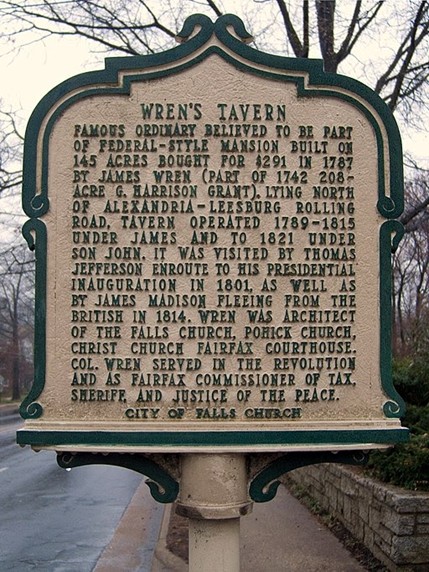
In the shadow of the 1769 brick church that still stands today as the Falls Church Episcopal, Sarah Wren (ca. 1780s–1840s) quietly advanced the cause of freedom. After inheriting several enslaved people following the death of her husband, architect and builder James Wren, Sarah ensured that they each learned to read before emancipating them—an act of profound defiance in an era when literacy among enslaved people was often criminalized. By linking freedom with education, Sarah Wren embodied the revolutionary belief that liberty requires knowledge.
The Declaration’s promise demands sacrifice
A generation later, Betsy Read (1846-1895) carried that conviction forward. The daughter of abolitionist and lay preacher John Read, Betsy risked violence to teach Black adults and children to read and write in and around Falls Church. With her father and uncle, Hiram Read, she organized secret classes for enslaved people and for those crossing into Union lines, defying local laws and the wrath of Confederate sympathizers.
When it became too dangerous to gather at her uncle’s home, Betsy went house to house, quietly continuing her lessons. In 1864 her father—serving in the Union Home Guard—was captured and executed by Confederate soldiers. Betsy and her aunt braved hostile territory to retrieve the body. Betsy’s courage reminds us that the Declaration’s promise of life and liberty demanded sacrifice long after 1776.
A bold expression of self-determination
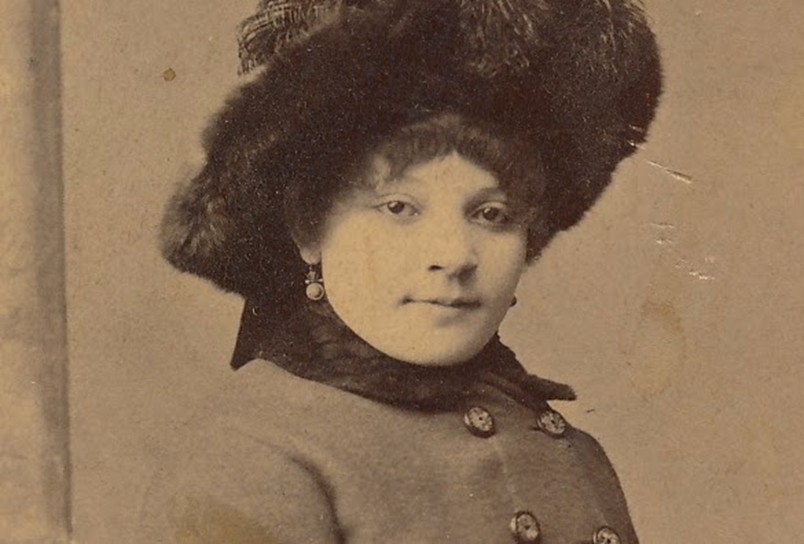
Harriet Foote Turner, a free woman of color working on the Fitzhugh plantation, also understood the sacrifice required to secure freedom. In 1851, entrusted to transport 12 newly purchased enslaved people from the Alexandria slave market, she instead posed as their owner, forged travel passes, and led them north to freedom in Canada. Unable to return safely to Falls Church, she nevertheless maintained ties to family and later purchased land for relatives on what would become the site of Tinner Hill. Her daring act stands among the boldest expressions of self-determination in our local history.
Transforming survival into prosperity
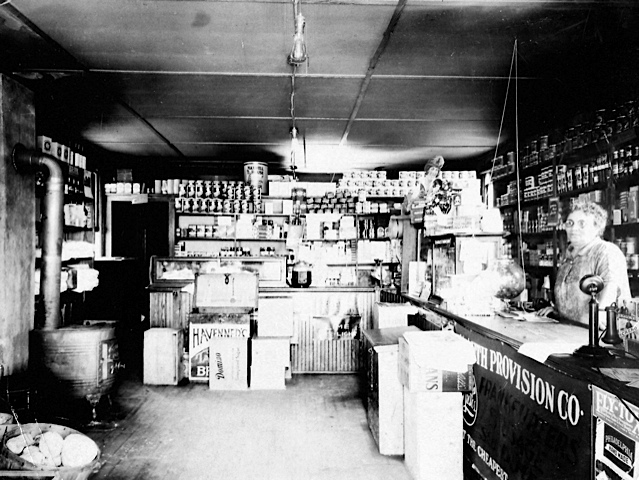
For Eliza Henderson, liberty was not an abstraction but a hard-won reality. Enslaved in Washington, D.C., she endured sexual assault and, after attempting escape, was sold away from her family to Mississippi. There she married and bore a son.
Following the Battle of Vicksburg, Eliza seized her chance. Carrying her infant son—hidden inside a trunk for protection—she followed Union troops back to Washington and her family. After emancipation, Eliza purchased land at what is now Broad and Washington Streets in Falls Church, where she operated a grocery store for many years, transforming survival into prosperity and rooting her family’s future in the very soil of a town once shaped by slavery.
Defending and expanding the ideals of representative government
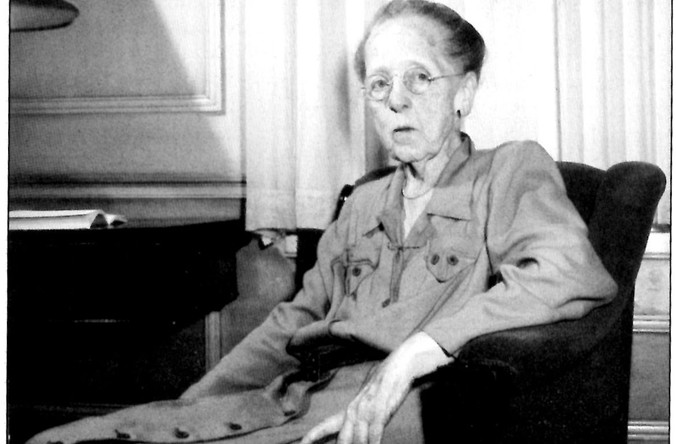
As the nation wrestled with women’s political rights, Mattie Gundry reshaped Falls Church civic life. After moving here in 1893, she founded the Virginia Training School for children and adolescents with intellectual disabilities in 1899, leading it for nearly half a century.
In 1908 the Falls Church Town Council elected her as a school trustee—making her the first woman in Virginia to serve in that role—only to be declared ineligible because she did not have the right to vote. Undeterred, she became active in the Women’s Suffrage League of Fairfax in 1913 and continued advocating until ratification of the Nineteenth Amendment in 1920.
In 1921 she became one of the first two women elected to the Falls Church Town Council, serving three terms. Mattie Gundry’s life illustrates how the ideals of representative government must be defended and expanded.
Equal investment in children’s futures
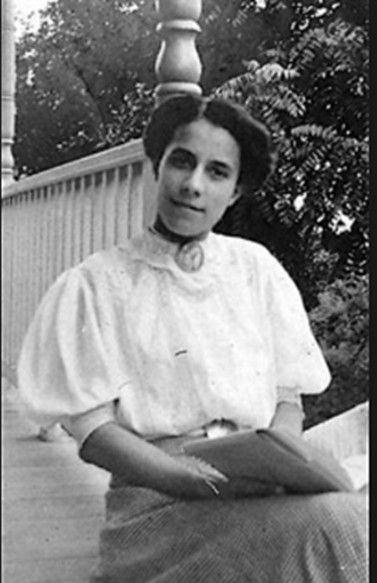
Mary Ellen Henderson devoted 32 years to teaching and leading Falls Church’s “Colored School,” where classrooms lacked heat, running water, and janitorial services. In 1936, she documented the stark disparities between Black and white schools and presented her findings to the city council.
Her advocacy led to the construction of a new school for African American students. Her persistence affirmed that equal protection under law must include equal investment in children’s futures.
Modern-day struggles to realize the Declaration’s promise
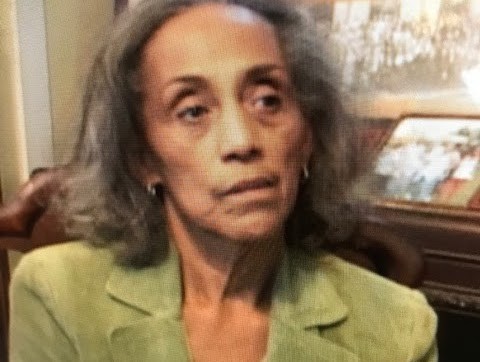
The struggle to realize the Declaration’s promise continued into the modern era. In 1961, Marian Costner Selby became one of the first African American students to attend George Mason High School, and in 1964 she became the school’s first African American graduate. She went on to break barriers in the Fairfax Education Association and the Fairfax County Planning Department. Her quiet courage and dignified resolve helped integrate both classrooms and professional spaces.
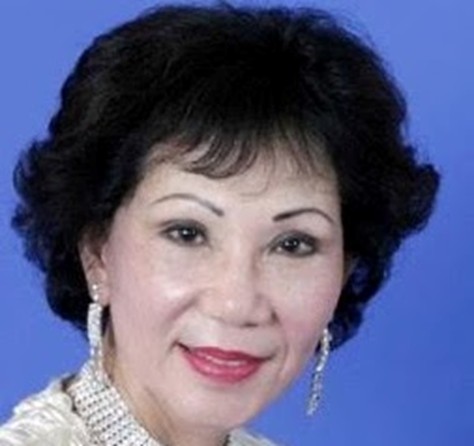
Jackie Bong Wright fled Communist Vietnam with her three young children in 1975 and quickly made civic participation her mission. After moving with her children to Falls Church, she established the Indochinese Refugees Social Services, organized vocational training courses for immigrants, and founded the Vietnamese American Voters Association, registering thousands of new voters between 2000 and 2004.
Recognized by Washingtonian Magazine and awarded the Gold Medal of Liberty and the Gold Peace Statue, she has devoted her life to empowering citizens and advocating for victims of sex and labor trafficking. In her work, the revolutionary principle of freedom and government by the people finds renewed meaning.
Celebrating women who insisted that America’s ideals apply to everyone
As we approach America’s 250th birthday, the Falls Church Women’s History Group celebrates not only the authors of the Declaration of Independence but also the women who insisted its ideals apply to everyone. From emancipation and secret schools to suffrage campaigns, integration, and voter registration drives, these women transformed lofty language into lived reality. Their stories remind us that liberty is not self-executing. It must be taught, defended, expanded, and renewed. In honoring the women of Falls Church, we honor the enduring work of making independence meaningful for every generation.
For more information about the Falls Church Women’s History Walk and the women honored by the Falls Church Women’s History Group, visit our website: www.fallschurchwomenshistory.org