Social Safety Net, Metro Funding Top 2026 Legislative Program
Summary
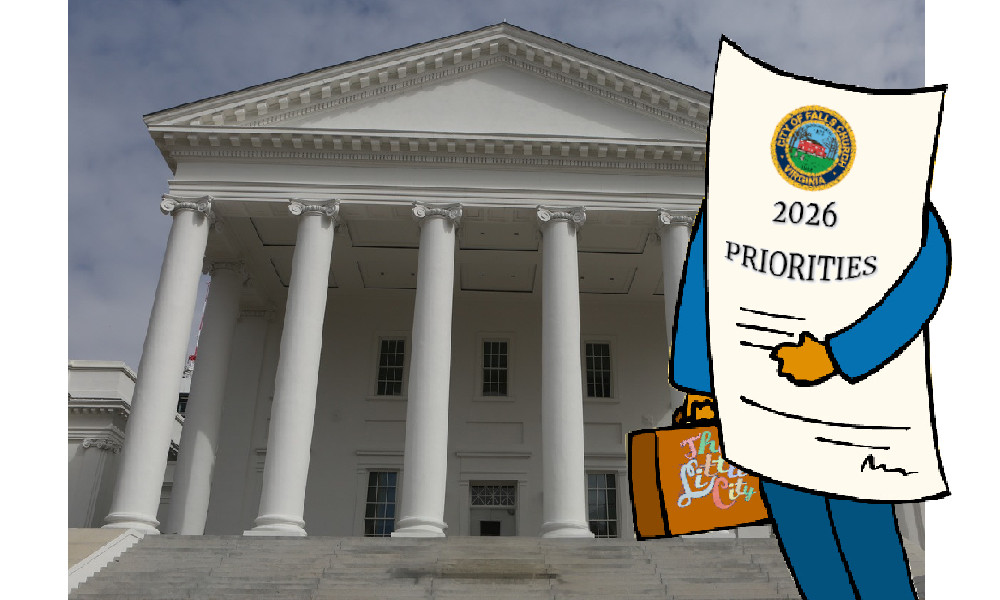
On November 24, 2025, the City Council adopted the legislative program the City will pursue in Richmond when the General Assembly convenes on January 14, 2026.
City priorities in alphabetical order include accessible and affordable housing/tenant rights, environmental sustainability, public safety/electronic enforcement, public safety/gun control, social safety net funding, telecommunications/cable undergrounding, and Washington Metropolitan Area Transit Authority (WMATA) funding. At its December 8, 2025, meeting, Council voted to add to its legislative agenda the Planning Commission’s request that its authority to approve site plans be restored. [See the Pulse post, Council Advocates Return of Site Plan Authority to Planning Commission, December 19, 2025.]
Council members agreed that of greatest importance among these priorities is seeking state aid for a social safety net necessitated by cuts to the federal government’s budget last July. Second, they agreed, is dedicated funding for Metro, followed by increasing electronic highway safety enforcement, tools to encourage affordable housing, gun control measures, and increasing stormwater funding and tree canopy thresholds.
Themes threaded throughout the legislative program include the desire for the Commonwealth to invest in critical core services, such as education and transportation, in long-term sustainable ways, and a push for greater local authority across the board—from the City’s ability to set its own parking requirements and tree canopy thresholds to enforcing concurrent undergrounding of communication service cables and equipment with Dominion Energy Virginia power line projects and putting speed, photo red, and stop sign violation cameras in place where they are most needed.
City priorities and positions for 2026
The City Council discussed the draft 2026 legislative program at its November 17, 2025, work session, formally adopting this agenda a week later at its regular meeting on November 24 and amending it on December 8. This program provides the basis for the positions the City will take before the General Assembly when it convenes in Richmond in mid-January.
City of Falls Church 2026 Legislative Program
Summarized by the Falls Church Pulse in the accordion table below
Significant community input
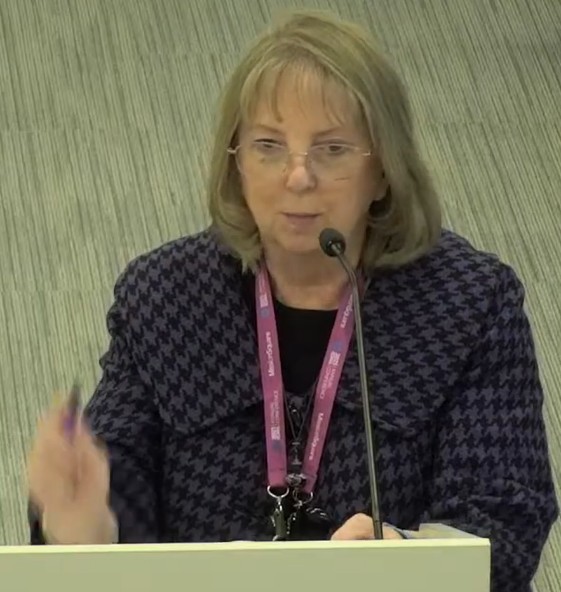
Community Relations and Legislative Affairs Director Cindy Mester said that she and the City Council’s Legislative Committee received significant local and regional input in drafting this year’s legislative program. Accordingly, the program approved by Council endorses the legislative positions of the:
- Falls Church City Public Schools (FCCPS)—school funding formulas, teacher shortages and salaries, mental health support for students, outdoor education funding, opposition to diverting public school funds to non-public schools, and policy recommendations on such topics as school accreditation and student assessment, international baccalaureate requirements, performance-based assessments, safe gun storage, in-state tuition for Deferred Action Childhood Arrivals (DACA) students, and history and social studies standards.
- Mary Riley Styles Public Library (MRSPL)—full funding of state aid for public libraries and protection of the freedom to read without limitations.
- Environmental Sustainability Council (ESC)— energy efficient buildings and electric vehicle (EV) standards and infrastructure as well as incentives for micro-mobility and the preservation of urban forests. Note: The Council did not endorse the ESC’s stance on modernizing the building code to permit single-stair dwellings up to six stories in height to enable maximum usable square footage and lower the cost of construction due to the Legislative Committee and Council’s fire and safety concerns.
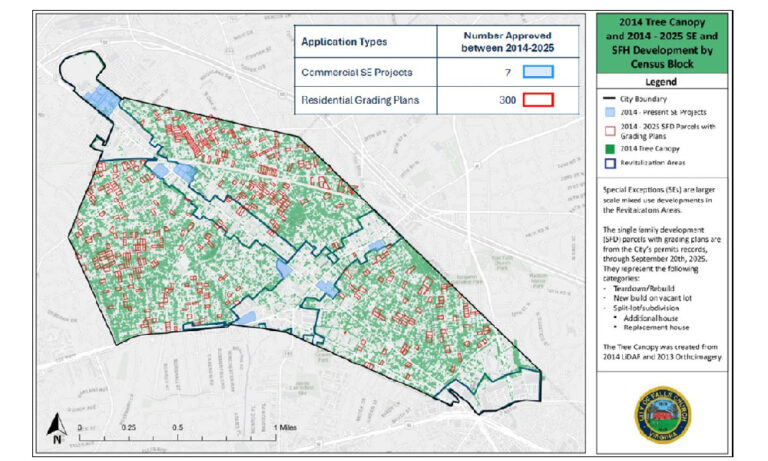
- Urban Forestry Commission (UFC) and the Village Preservation and Improvement Society (VPIS)— increase in tree canopy local authority to at least 20%.
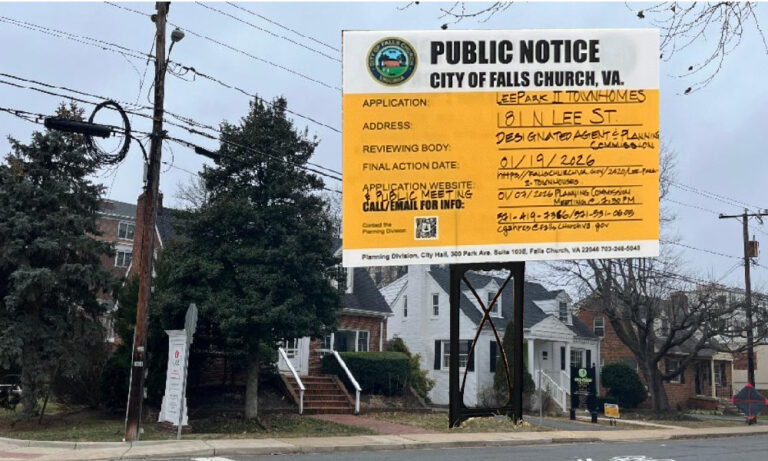
- Planning Commission—concurrent undergrounding of telecommunication/cable with electrical lines and, in its November 19 adoption of state-mandated changes to the code regarding site plans, restoration of the Commission’s site plan approval authority.
- Falls Church Climate Action Network (FCCAN)—increase in alternative energy options, especially solar power, and in statewide targets for renewable energy; local authority tools such as the regulation of energy sources for leaf blowers and other landscaping equipment; and Virginia’s return to the Regional Greenhouse Gas Initiative.
- Virginia Municipal League (VML)—statewide policies and positions, particularly regarding affordable housing as advocated by the Cities of Falls Church and Alexandria as well as Arlington County.
- Northern Virginia Transportation Authority (NVTA) and Northern Virginia Transportation Commission (NVTC)—regional transportation funding and particularly dedicated funding for WMATA.
Emphasis on social safety net funding
In its hour-long discussion during the November 17, 2025, work session and again when the legislative program was adopted on November 24, the City Council stressed the need for assistance from the state to manage the shortfalls caused by drastic cuts in the federal budget to Medicaid, Supplemental Nutrition Assistance Program (SNAP), and housing with Congress’s enactment in July 2025 of H.R.1—the One Big Beautiful Bill.
While the Council did not formally rank the priorities listed in the table above, Mayor Letty Hardi maintained that “the social safety net needs to be higher even than traffic safety.” She suggested it should be number one on the list with dedicated Metro funding second and found support for this ordering both from other members of Council and staff.
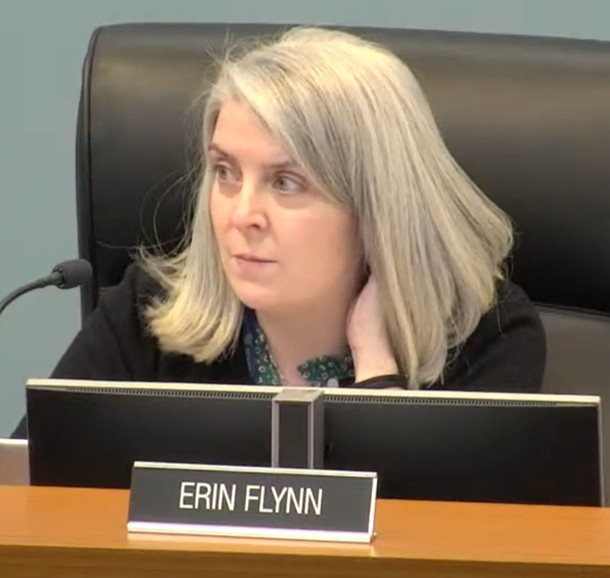
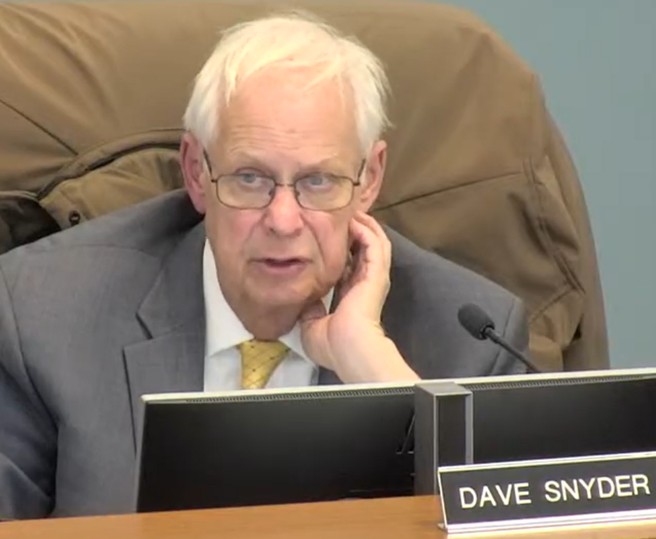
To these priorities, Council Member Erin Flynn expressed her desire that the state do more regarding affordable housing through such mechanisms as low income tax credits. Council Member David Snyder added to the list of priorities protection against lapsing of the City’s affordable dwelling units, increased electronic traffic enforcement, and passage of commonsense gun safety laws. Vice Mayor Debora Schantz-Hiscott emphasized the importance of environmental concerns, including managing stormwater and increasing the tree canopy.
Investments in core services
Beyond the immediate necessity of a social safety net, the City’s legislative program urges the state to “focus on investments in critical core services for long-term stability, not year by year budgeting.” To these ends, the legislative program asks Richmond to “increase investments in K-12 [public education], human services, police, transportation, and other shared state and local programs after years of state underfunding.” The document specifically requests that the General Assembly “fully implement JLARC recommendations to establish more equitable funding distribution of allocating school funding and continue to increase overall K-12 funding.”
The City’s legislative program similarly advocates long-term investments by the Commonwealth in transportation. Among them, the City asks the General Assembly to resolve structural funding deficits through dedicated, sustainable, and reliable sources of revenues to support all transit operators in the Northern Virginia Transportation District, including Metro, and fully replace the dedicated revenue to transportation lost due to the elimination of the state sales tax on groceries, which went into effect January 1, 2023.
Protecting local authority
The other theme that emerges from the legislative program as well as Council discussion prior to its adoption is a deep concern about the loss of local authority. In Virginia, the Dillon Rule is a legal principle that strictly limits local government powers, meaning cities and counties only have authority expressly granted to them by the state.
The City’s desire for greater local control runs throughout the legislative program—from the authority to ban smoking outdoors to the removal of Commonwealth-imposed limits on individual electronic participation by members of a public body, such as City Council and the Planning Commission. The legislative program explicitly “opposes any legislation that reduces or eliminates existing local government authority, particularly in such key areas as taxation, land use, enforcement of zoning and land use regulations, and the protection of public health, safety, and welfare.”
Further, the legislative program states, “If regressive taxes such as grocery sales taxes are to be reduced or eliminated, the locality should be held harmless for revenue loss. Additionally, state and local taxes should be transformed, providing localities the modernized taxing authority and revenue diversification necessary to adequately support vital programs and services without an over reliance on property taxes.”
Setting parking minimums: A test case
When discussing Senator Saddam Azlan Salim’s plan to introduce a bill prohibiting localities from setting minimum parking requirements in an effort to increase affordable housing, City Council members balked at supporting such a measure on the basis of losing local control. “I am concerned about taking away local authority,” Council Member Snyder said. While supportive of tools to create more affordable housing, he suggested that the City remain neutral on the bill and work with Senator Salim to achieve additional flexibility for localities.
Council Member Flynn agreed that it would be best to collaborate with the Senator and that she did not want to give up Council’s authority to set and update the City’s parking codes. Council Member Marybeth Connelly added, “Every neighborhood, every locality is different. I’m not okay giving up local authority.”

And Council Member Laura Downs said the discussion reminded her of the removal by Richmond of local Planning Commission authority to approve site plans. “I’m not a fan of removing local authority even though I don’t support parking minimums in general,” she said.
Only Mayor Hardi expressed support for Senator Salim’s bill as currently drafted. She said that “75% of citizens want more housing. …I fear that if we say no to everything, we will get steamrolled.” Ms. Hardi suggested that if parking requirements were eliminated, “the sky will not fall. Most developers will voluntarily build parking. The market will respond [to what is needed].” She further predicted that removing parking minimums will be “one of the most benign” of a spectrum of bills the General Assembly will consider in the next legislative session to achieve its housing goals.
Nonetheless, the majority of Council preferred to work with Senator Salim to preserve local authority to the extent possible, and Ms. Mester said initial conversations with the Senator on this aspect of the legislative program have been productive.
Seeking flexibility in the City’s taxation authority
In the course of the November 17 work session, Council Member Justine Underhill raised the possibility of another tool for increasing housing production—a split-rate taxation authority, where the City would be authorized by the state to classify land and improvements as separate categories for purposes of local taxation. Currently, the City applies a uniform rate across all parcels regardless of the structures on it or how the land is used.
Ms. Underhill recommended that the legislative program include a request of the General Assembly’s legal staff to explore this and other mechanisms for “taxation authority flexibility,” and the Council agreed to a study of the possibilities. At Council’s November 24 meeting, Mayor Hardi requested that the possibility of further taxing vacant land and buildings be added to the tools to be explored.
Meantime, Delegate Joseph P. McNamara (R), who represents House District 40 including Salem City and parts of Roanoke County and Roanoke City, has prefiled HB10: Real property tax; classification of land and improvements, ensuring General Assembly consideration of this issue. Delegate McNamara’s bill “reclassifies improvements to real property as a separate class of real property and authorizes any locality to impose a real property tax on improvements to real property at a tax rate that is different than the rate applied to the land on which such improvements are located. Such rate may exceed, equal, or be less than the tax imposed upon the land on which the improvements are located.”
The General Assembly convenes on January 14, 2026, to begin its work. The City has yet to see the priorities of its representatives, Senator Salim and Delegate Marcus Simon, but has provided them with its legislative program.
References
- City Council Work Session, November 17, 2025. This official video will not display properly on a small screen as it includes the agenda. Discussion of the legislative program begins at timestamp 2:47:34 and ends at timestamp 3:53:07.
- City Council Work Session, November 17, 2025. YouTube video.
- City Council Regular Meeting, November 24, 2025. This official video will not display properly on a small screen as it includes the agenda. Discussion of the legislative program begins at timestamp 56:38 and ends at timestamp 01:23:42.
- City Council Regular Meeting, November 24, 2025. YouTube video.
- City Council Meeting, December 8, 2025. This official video will not display properly on a small screen because it includes the agenda. Site plan code amendment discussion begins at timestamp 1:14:04 and ends at timestamp 1:21:48.
- City Council Meeting, December 8, 2025. YouTube video. The relevant timestamps on YouTube are 1:20:01-1:27:51.
- Staff report on 2026 City of Falls Church Legislative Program, November 19, 2025.
- 2026 City of Falls Church Legislative Program, November 17, 2025.
- Falls Church City School Board 2026 Legislative Program – Draft.