City Discusses Final ULI Report, Plans Next Steps to Redevelop 15-acre Gordon Road Triangle
Summary
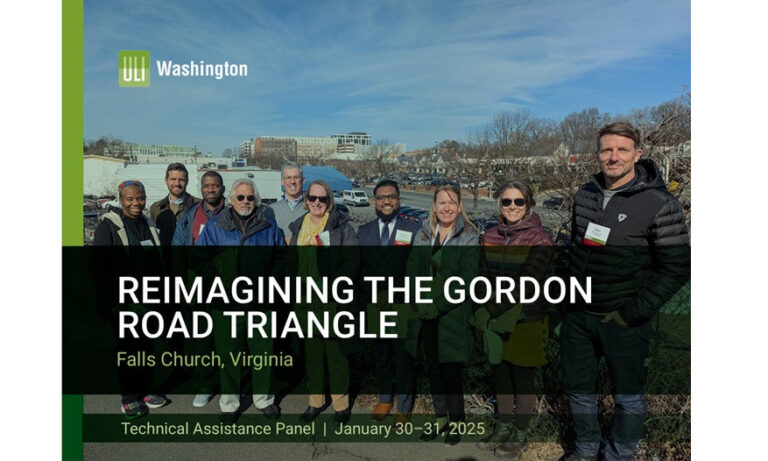
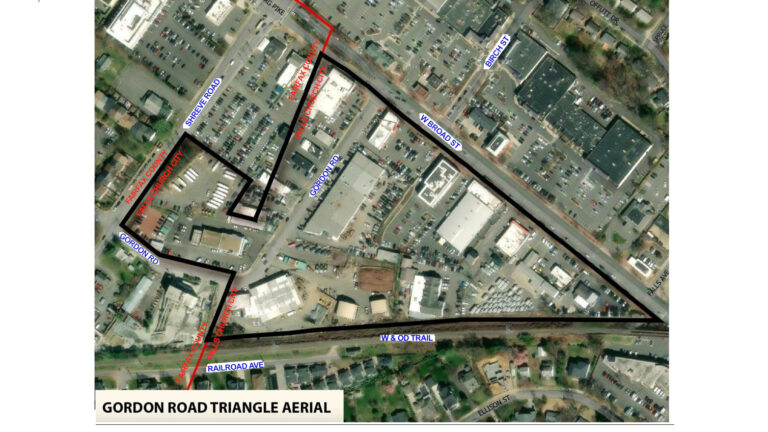
Last January, the City hosted the Urban Land Institute Technical Assistance Panel (ULI-TAP) and tasked its members with providing a technical analysis of the land-use and planning issues associated with the Gordon Road Triangle (GRT). The 33-page final ULI report, titled “Reimagining the Gordon Road Triangle,” was published five months later on June 30, 2025. On September 15, the report’s findings were discussed for more than an hour and a half at a City Council work session that included ULI representatives, Planning Commission and Economic Development Authority (EDA) members, and City staff. [For background on ULI-TAP’s analysis, see the Pulse articles Falls Church City Receives the Gordon Road Triangle Report, August 10, 2025, and City Explores Redeveloping the 15-Acre Gordon Road Triangle, Including Its Property Yard, February 18, 2025.]
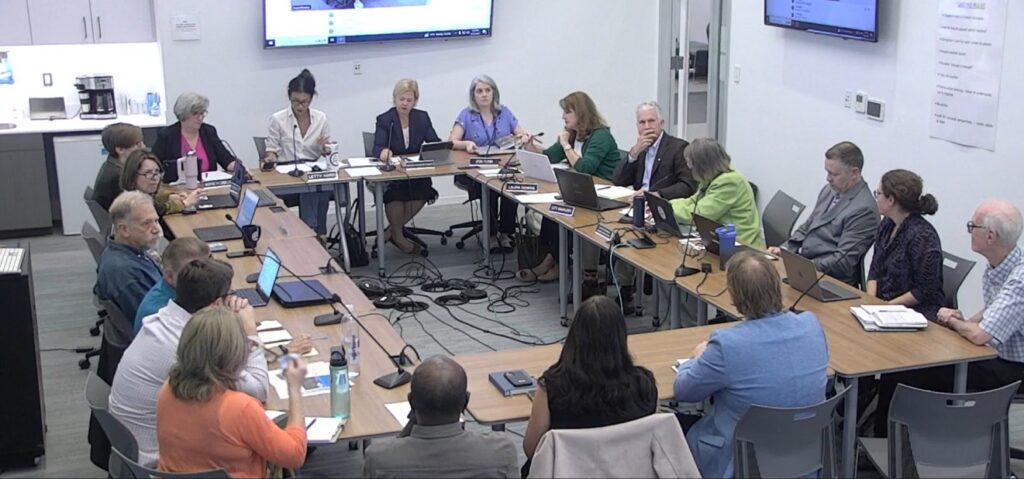
Six City Council members, five Planning Commissioners, and four EDA members were present at the work session. Council member Justine Underhill attended virtually.
City Manager Wyatt Shields provided the introduction, noting that the City asked the ULI to think about the future of the GRT and compare its recommendations with such foundational documents as the West End Small Area Plan and the Fox Architects Feasibility Study [see the Pulse post, Property Yard Design Concepts Report Released, May 9, 2024] as well as the Beyer family’s Future Land Use application with Fairfax County [see the Pulse post, Fairfax Reviews Gordon Road Triangle Plans, April 28, 2025]. The ULI TAP information should be considered for planning the area in a coordinated way. From the staff perspective, Mr. Shields noted that the report is important information that merits the Council’s attention as its members think about the 2-year work plan they will draft in January 2026, and where the GRT fits into other priorities.
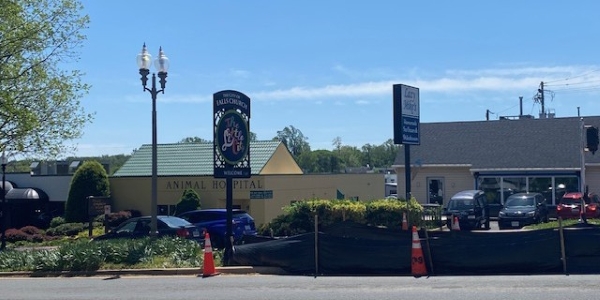
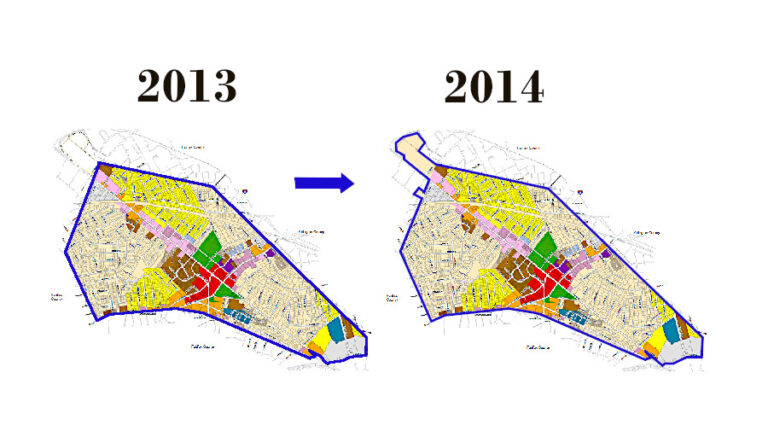
City Senior Planner Emily Bazemore then summarized the panel’s goals and effort and noted that the ULI analysis and recommendations provide an “overall framework” with the “option of maximum flexibility.” She presented several new ULI slides, including the West End Surrounding Context, a summary slide acknowledging that the GRT falls within Planning Opportunity Area Number 4. Ms. Bazemore also noted that the Property Yard parcel is currently zoned R-1A as a result of the 2013 boundary adjustment between the City and Fairfax County. The final ULI slide presented the ongoing projects and initiatives related to the GRT, for which the ULI-TAP report and recommendations might be used as an “aspirational resource.”
The Discussion of the final ULI report
Following the summary of the report, Mayor Letty Hardi opened the initial questions and comments to the Planning Commissioners and EDA members.
Planning Commissioners focus on sustainability, environment and housing, noting space challenges
Planning Commission Chair Andrea Caumont commented on the fact that there is a lot that the City wants to do in this area, observing that it seems a “problem of geometry,” how to fit everything in to this area. Vice-Chair Tim Stevens said that “trying to blend these light industrial uses with new residential uses will be a challenge.” Mr. Stevens also noted that while there are a lot of very good public design elements included, the report was “rather light” on sustainability. He suggested that those elements might be pulled over from the West End Small Area Plan.
Commissioner Phil Duncan pointed out that in regard to plans for the tree canopy in the area of the W&OD, Dominion Energy Virginia needs to be onboard in the discussions of tree plantings around the high voltage power lines. Mr. Duncan reiterated concerns that “…every dream and hope that we have here in Falls Church is going to fit into this 5 acres of land.” He pointed out that one of the City’s most challenging goals is to attract small retailers as the commercial piece in this and other developments, noting that mom-and-pop businesses have a hard time locating in big buildings.
The City needs to “be mindful of what we promise at the outset.” Mr. Duncan also noted the lesson learned with the West Falls development that “most of the residents that will be affected [by development in the GRT] will be outside the City limits.”
Commissioner Sharon Friedlander commended the ULI-TAP for identifying opportunities, especially the potential for an apprenticeship program and partnership with private entities within the development. She said this would be a great benefit of continuing to house light industry in the GRT.
Regarding affordable housing, Commissioner Robert Kravinsky recommended thinking about as much diversity of housing as possible. He also referenced successful efforts in other cities to create food truck parks. Such a park would only require ¼ or ½ acre and would add a certain excitement to the area, Mr. Kravinsky said.
EDA members support preserving light industrial use, but disagree on density of redevelopment
EDA Member Alan Brangman, who attended the January panel session, recommended having discussions with the Beyer family on how their and the City’s plans for development can be brought together. Mr. Brangman also said with respect to the Fox Architects Feasibility Study for a new Property Yard that the City may not be thinking big enough, that maybe a public-private partnership developer could build above whatever the City needs on lower levels and maximize the GRT’s 5 acres. “Density is something that works in our favor,” he said. Mr. Brangman also reiterated the fact that the City’s Operations Center cannot be located in another County and must stay within the City.
EDA Member Matt Quinn commented on the need to be creative with density, asking “How do we get all the things we want into this crazy space?” Mr. Quinn also noted that the City has almost no industrial space left within its borders.
EDA Member Jim Coyle urged caution about “force fitting multiple uses” into the GRT and asked whether another site might be found for the City’s Department of Public Works.
EDA Chair Ross Litkenhous voiced a concern about the potential for contamination from decades of industrial uses, and said there may be significant environmental issues that are going to require cleanup. The cost of cleanup may really “strain the financial feasibility” of what a private developer can provide, he said.
Will high-rise buildings at the Gordon Road Triangle “wall off” the West End?
Mr. Litkenhous went on to note that Falls Church has to remain “unique” and urged the meeting participants to think about having a development that is “distinctively creative from the rest of the development that we have seen in the City.” He further commented that the City needs to preserve as much industrial or flexible space (for innovative businesses) as it possibly can. In addition, he said that if the City creates too much height at Gordon Road, then Falls Church’s western gateway almost becomes “walled off,” which may prevent visitors from coming into downtown areas.
Mr. Litkenhous also questioned the idea of a parking garage in the middle of the site, which he thought would indicate a “car-forward” part of town. Instead, he suggested thinking about bringing people in on foot and by bicycle from the W&OD Trail gateway. Finally, given the other development in the area–West Falls, Birch & Broad, and the Beyer family’s plans, Mr. Litkenhous said the City runs the risk of a “fortress effect” on that side of the City.
City Manager suggests a “champion” for the GRT redevelopment
The Panel recommends that the City appoint a Gordon Road Triangle Implementation Manager at the City of Falls Church to “champion” the project. Given the complexity of the project, City Council Member Laura Downs asked who the champion would work for and suggested the City consider having an owner’s representative. Mr. Shields responded that the champion is envisioned as a staff person, but the scope of work would lay out the communication and other management details.
Ms. Downs agreed that the City should take the lead and improve the Property Yard/Operations Center first and further suggested that any apprenticeship program could work with the high school. She did not like the idea of a parking garage and questioned whether food trucks are environmentally friendly.
$30 million debt ceiling for Property Yard considered too high, while the $30 million cost may be too low
Council Member Erin Flynn urged the City to think about height, density, and scale, and said she would like to see the GRT redevelopment as “light industrial, amenity rich.” Ms. Flynn also wondered how we are going to create a path from the W&OD through the area that is going to interest people and be inviting and attractive. She would like to consider dedicated City workforce housing and expressed concern about stormwater and sewage requirements.
Ms. Flynn was also reluctant to scrap the $30 million plan for the Property Yard. She asked where the panel was on this particular issue. “Do we start from scratch?” ULI Manager Marc Gazda responded that the panel saw that number as much too high for what the City should reasonably expect to set as a debt ceiling. He indicated that creative financing may be able to lower that number. Later, Mr. Brangman reminded everyone that the $30 million cost is for construction only and does not include other soft costs (indirect costs) involved in the project.
Council Member Justine Underhill liked the idea of food trucks or small stalls that could populate an attractive place and become a destination for people walking or biking on the W&OD Trail. While she would like to see small businesses in the GRT, Ms. Underhill said that density would be a “rather good option here.”
Draw lessons from the West Falls experience
Vice Mayor Debora Schantz-Hiscott reflected on lessons learned from the high school project, saying that when looking at what the City is trying to fit into the GRT site, it does “feel a little overwhelming.” She supports workforce housing and appreciates the site’s connections to Fairfax County, the W&OD Trail, the West Falls development, and the West Falls Metro as well as the proposed apprenticeship programs and the concept of innovation hubs.
No timeline yet, but at least we know what we need
Ms. Schantz-Hiscott asked about the redevelopment timeline and scope of work. Mr. Shields responded by describing the role of the champion and summarized the timeline for the Property Yard within the context of the City’s multi-year Capital Improvements Program (CIP). He added, however, that the City is open to “considering all options.”
Mr. Shields acknowledged that the benefit of the Fox study is that it puts all the data in one place and provides the space needs analysis and conceptual plans on how the City’s public works and other requirements could be met on the site. He reiterated that there are pressing needs at the existing facilities, and that the GRT’s redevelopment may be able to meet some additional public safety needs.
He said the work that needs to be done between now and FY2027 is to figure out the big picture and then narrow down what the City is going to do while remaining open minded. He sees the champion’s role as making sure all the necessary conversations with multiple stakeholders happen.
A concrete plant in the mix
Finally, Mr. Shields emphasized that there is virtually no possibility (99.999% certainty) of moving the Property Yard to another location. The concrete plant, Vulcan Materials, situated between two City lots in the GRT, has no plans to move.
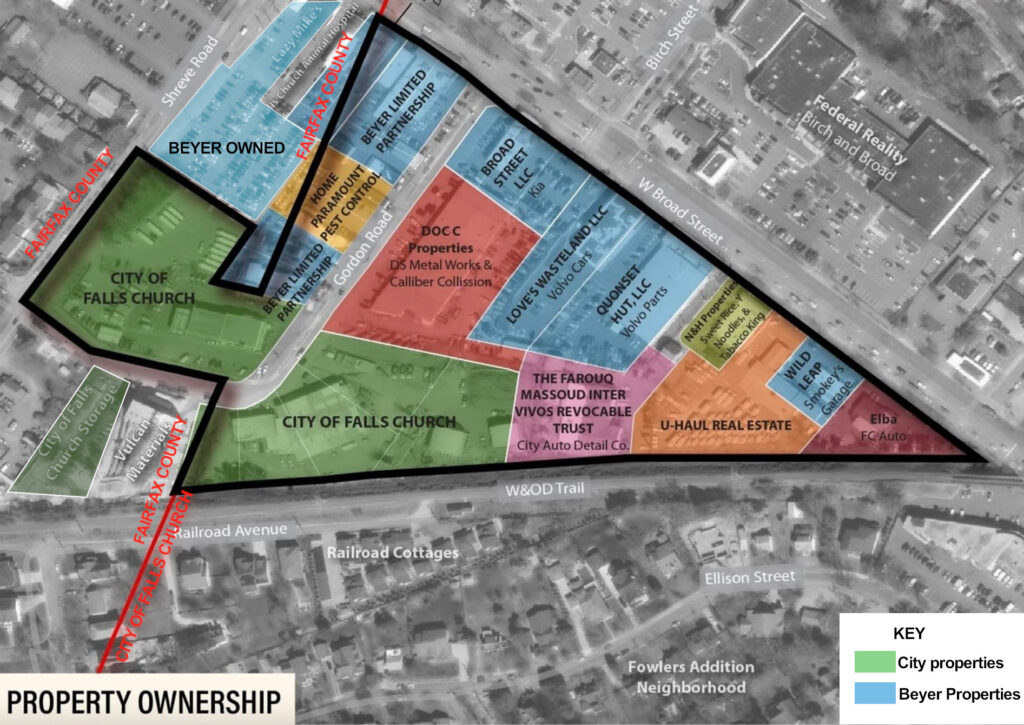
Council Member Marybeth Connelly reiterated that the Property Yard is the most important element in the GRT that needs to be addressed. She further noted that the concrete plant, which is outside City limits, is not going anywhere and is an anchor in the area. Ms. Connelly also said she is concerned about contamination, bus parking, and the need to keep the Falls Church Homeless Shelter on the site.
Everything for everyone?
Mayor Hardi concluded the discussion by asking whether the GRT redevelopment “can be everything for everyone” and “how are we going to pay for it?” She further noted that the Property Yard is the last big public facility that the City has yet to invest in. Ms. Hardi voiced support for “activating” the W&OD as a key asset. She is concerned about the parking garage and is somewhat skeptical of the proposed finance piece.
The Mayor also reiterated that discussions with Fairfax County are necessary to see what they envision on the corner of W Broad Street and Shreve Road so we can have a “unified triangle.” She said she thinks the City should revisit the West End Small Area Plan.
Next Steps
Mr. Shields said that staff plans to bring to the Council early next year a road map for GRT redevelopment that will include making staff assignments, identifying needed consultants, proposing regular meetings with property owners, and presenting a structure and timeline to the Council.
References
- Gordon Road Triangle Final Report
- Gordon Road Triangle TAP Presentation Slides
- September 15, 2025 Work Session Agenda
- September 15, 2025 Work Session Minutes
- September 15, 2025 Work Session (video). This official video will not display properly on a small screen as it includes the agenda.