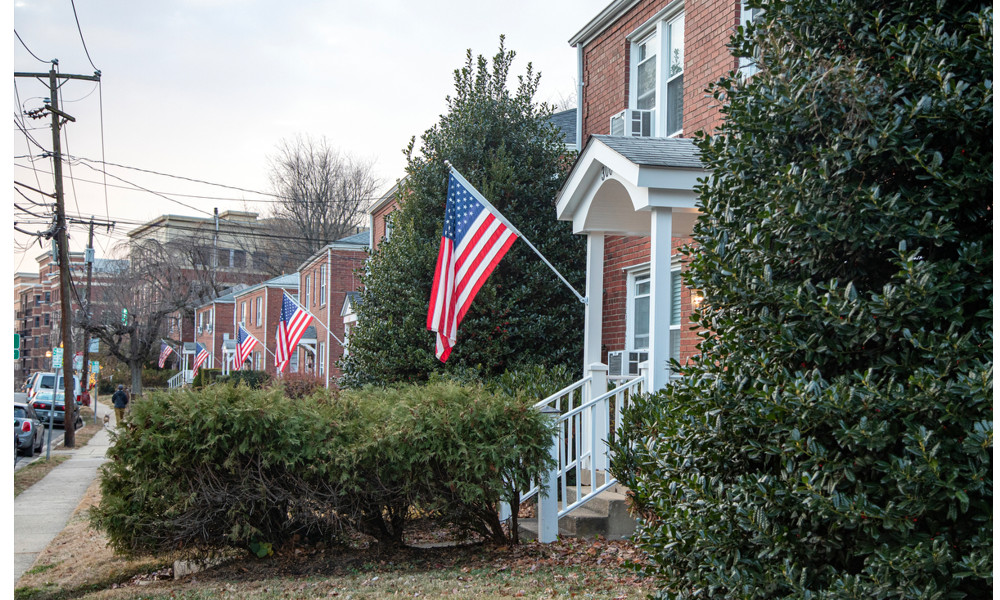
Council Mulls Proposed Process to Redevelop Virginia Village
Summary
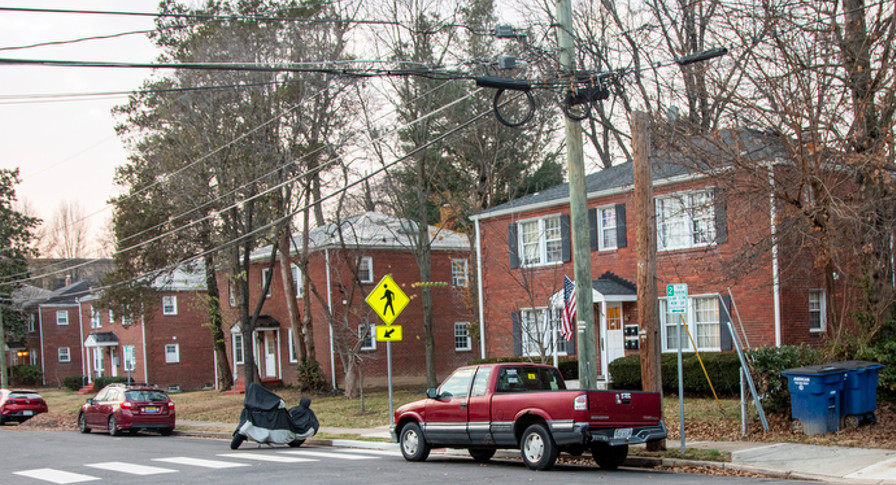
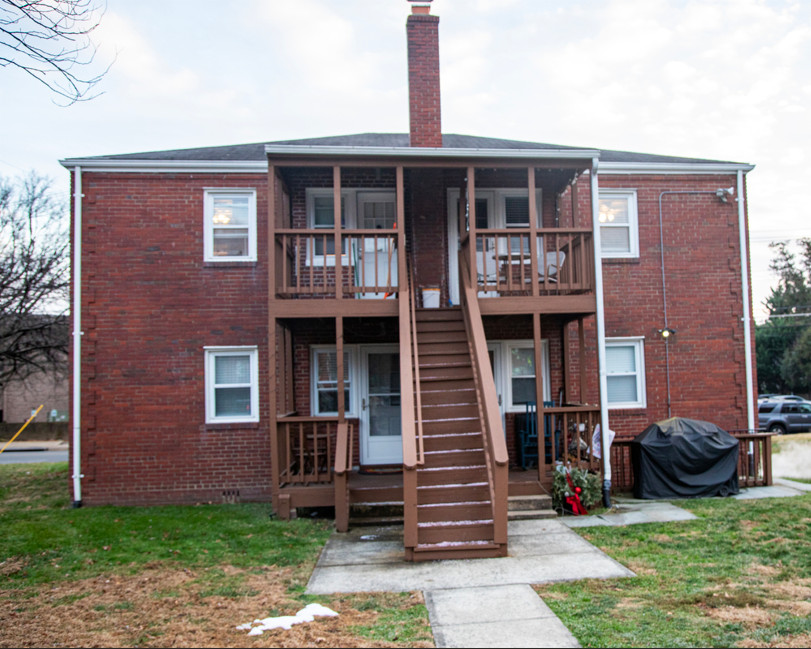
- The City’s Economic Development Authority (EDA) now owns nine of the 20 quadplex properties in the Virginia Village neighborhood, some of which are contiguous and so offer an opportunity to redevelop the site. In addition, the EDA hopes to purchase more units at the site. The City’s intent is to retain and expand affordable housing through a full or phased redevelopment of the neighborhood.
- At its November 17, 2025, work session, the City Council discussed a staff-proposed roadmap outlining how the City might issue a request for proposals (RFP) to non- and for-profit developers in the next calendar year for the redevelopment of Virginia Village while fashioning a new vision and zoning tools to accomplish its affordability goals.
- Only redevelopment was presented for Council’s consideration, which staff anticipate could include market rate as well as affordable housing. There was no discussion of renovating and expanding the existing City-owned quadplexes, which currently are 100% affordable housing.
- While supportive of expanding affordable housing at Virginia Village, some Council members and members of the Economic Development Authority (EDA) questioned the recommended approach. Their concerns ranged from whether the roadmap would actually increase affordable housing at the site and the need to ensure genuine community engagement in revising small area plans and zoning there, to whether issuing an RFP would have the unwelcome impact of spiking land prices, preventing the City from building truly affordable housing at Virginia Village, and the aggressiveness of the suggested timetable.
“All things housing”
Mayor Letty Hardi kicked off the City Council’s November 17, 2025, work session by describing it as a meeting about “all things housing.” The session featured a robust discussion of affordable housing at Virginia Village and plans for its redevelopment as well as the annual report of the City’s Housing Commission and a report from staff on affordable housing programs in Falls Church. [See the companion Pulse post, Housing Commission, Staff Urge Preservation of Expiring Affordable Units, December 10, 2025.]
Creating a path forward for Virginia Village
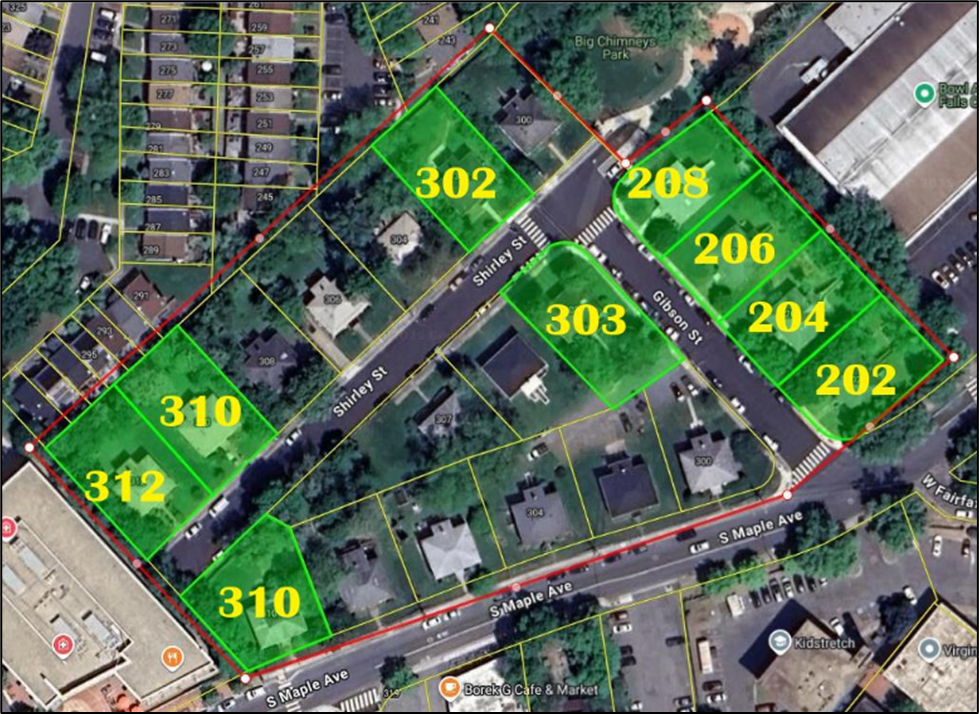
City Manager Wyatt Shields opened the Council’s update on and discussion regarding Virginia Village, noting that the City’s Economic Development Authority (EDA) now owns nine of the 20 quadplex properties in this neighborhood. These holdings include one quadplex purchased by the City in 2008 and another acquired by Wesley Housing Development Corporation (WHDC) in 2024. Wesley sold this property, 303 Shirley Street, to the City in August 2025 after terminating its agreement with Falls Church to manage and eventually redevelop Virginia Village.
Earlier this year on behalf of the EDA, the City staff sought and in June signed a contract with a new property manager, PROMAX Property Management, to oversee all day-to-day operations and tenant needs, maintenance, billing, and communication.
In addition, in October, the EDA purchased three properties along Gibson Street using funds from the City’s Acquisition Strike Fund and US Housing and Urban Development Fiscal Year 2024 grant funds. Originally totaling $9.25 million from a variety of sources including Amazon Reach and American Rescue Plan Act (ARPA) funds as well as EDA and City appropriations, the Acquisition Strike Fund balance is now $1.785 million. When combined with the adjacent 208 Gibson Street property already owned by the EDA, this acquisition creates a contiguous site of approximately 30,000 square feet, offering more flexibility for future redevelopment that might also take advantage of adjacent parcels such as 303 Shirley Street. According to their report to City Council, staff continue to talk with other property owners in Virginia Village to gauge their interest in selling their properties to the EDA.
Jobs #1 and #2
Mr. Shields said that in the short term, these units are being managed as committed affordable housing while the EDA seeks to acquire additional quadplexes. “Job #1,” he emphasized, “is to provide safe housing for our tenants before these properties are conveyed to another partner.”
“Job #2,” he continued, is to develop “a process by which we will ultimately convey these properties into the hands of a selected partner who will carry out the purposes that the City has designated. At its essence…this is a commercial real estate transaction to accomplish public purposes.” For the past five years, Mr. Shields added, the City Council has been clear that those purposes are “to preserve Virginia Village as affordable and, ultimately, to redevelop it with committed affordable housing.”
To accomplish this, “we need to get our land use regulations up to speed with that vision,” he said,and then draft a request for proposals that articulates what the City wants to achieve and ask the market to respond. Mr. Shields said staff wants to move quickly to describe this process to the community, and particularly to the tenants whose homes are involved.
Senior Planner Jack Trainor described several documents that staff propose to review and update, including older guidance such as the zoning chapter of the City’s Comprehensive Plan last updated in 2005, two of its Small Area Plans that govern parts of Virginia Village, the Future Land Use Map, and the different zoning designations for these properties (B-2 – Central Business and R-M – Multifamily Residential) as well as newer documents such as the Affordable Living Policy adopted by City Council in August 2025.
A roadmap for redevelopment
“We need to reconcile past visions with updated goals of achieving affordability on this property,” summarized Matt Mattauszek, Planning Director. He laid out the following roadmap and timetable, beginning with the end in mind of the City competing for state funding through Virginia’s Low Income Housing Tax Credit (LIHTC) program, which has a next application deadline of March 2027. He noted that if this deadline were missed, the City would have to wait another full year to apply.
| PERIOD | TASKS Legend: RFP issuance; Necessary policy updates; Redevelopment milestones |
|---|---|
| 1. Winter 2025/2026: | a. Prepare background material b. Conduct outreach to affordable housing non-profit community to assess project feasibility c. Scope Small Area Plan/Zoning Ordinance amendments to update vision and zoning rules for this site d. Perform preliminary site due diligence i. Conduct American Land Title Association (ALTA) Survey ii. Conduct Phase 1 Environmental Study |
| 2. Spring 2026: | a. Public review of proposed Small Area Plan and Zoning amendments with stakeholder groups b. Design and release Request For Proposals i. City Council appoints RFP Selection Committee ii. Proposals to include details on building height, number of units, mix of uses, mix of market and affordable, housing typologies, phasing, plan of finance iii. Informational meeting for potential respondents |
| 3. Summer 2026: | a. Continue public review of proposed Small Area Plan and Zoning amendments b. Selection Committee ranks RFP respondents City Council approves Interim Agreement with top ranked respondent i. Includes Development Term Sheet |
| 4. Fall 2026: | a. Conclude Zoning Ordinance/Small Area Plan amendments (1st & 2nd readings) b. Developer commences further due diligence activities and secures funding |
| 5. Winter 2026/2027: | a. Developer submits application with City, initiating the entitlement process b. Entitlement process concludes no later than February 2027 to meet Virginia’s March 2027 (9%) Low Income Housing Tax Credit (LIHTC) application deadline |
| 6. Spring/Summer 2027: | a. Developer learns whether LIHTC funds have been awarded to this project b. City Council approves Final Agreement c. EDA completes fee simple transfer of properties to the Developer (covenants governing land use) |
| 7. Fall 2027: | a. Construction Commences (pending availability of LIHTC/other funding sources) |
| 8. Late 2030: | a. Construction completed on Phase 1 redevelopment; Certificates of Occupancy issued |
Mr. Mattauszek described the process as “aggressive but thoughtful” and “a clear indication that we are moving forward,” that “we have enough for Phase 1” Virginia Village redevelopment.
Council and EDA reactions
“I’m excited to see Virginia Village as the next bold thing we do,” said Council Member Marybeth Connelly. She confirmed a site size of 4.2 acres and likened the project to how the City proceeded to build a new high school at the West End.
Council Member David Snyder noted that the Virginia Village project differs from the West End where the schools had one neighbor – Fairfax County, while this project abuts the multi-property Winter Hill/Cherry Hill neighborhood.
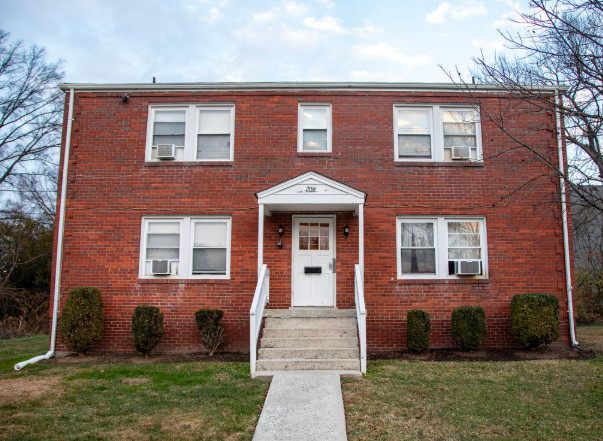
Mr. Snyder asked how many people Virginia Village currently houses and how many it might accommodate. Staff responded that one or two people live in each unit of the 20 quadplexes for a total of 80 units and up to 160 people; the City/EDA holdings include one vacant and inhabitable building for a total of 8 quadplexes, or 32 units, which can house up to 64 people. Currently, the City-owned properties are 100% affordable.
Mr. Snyder expressed the need for the project to accommodate more individuals than we do now, “otherwise we’re not really adding to affordable housing, and we’re spending a lot of time and money doing it.” He asked what can be developed in the block the City owns and noted that to put out an RFP, the City would need to specify basic goals, objectives, and targets to be able to evaluate any proposals it receives.
“What you’re raising is the very reason we need an RFP and to have the development community come in to highlight what’s actually feasible, given the parcels that we have acquired,” said Mr. Mattauszek. He added that he thinks it “not very likely” that the City will be able to obtain the entire site and believes several of the Virginia Village units are not competitive in terms of the tax credits the staff wants to pursue. There was no discussion of alternatives to redevelopment, such as renovation and possible expansion of the existing quadplexes for phased relocation of existing tenants and to house more people and larger families.
Consider the context “to the west”
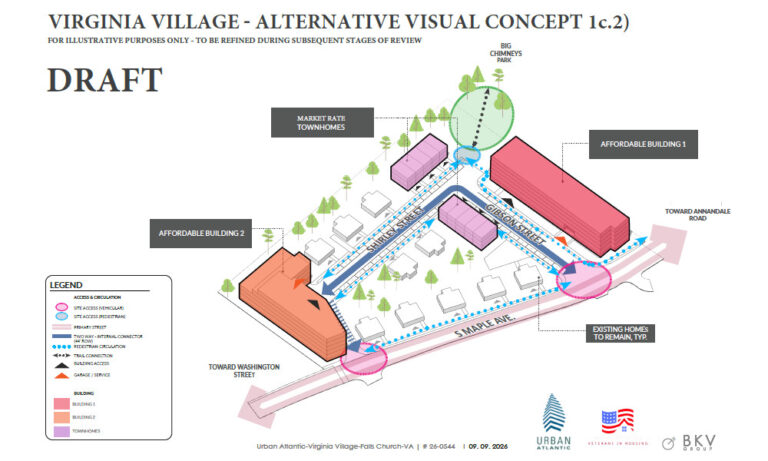
Reporting that the staff with the outside assistance of some college students has not “reached any buildable or realistic scenarios,” Mr. Mattauszek said the City’s proposed approach is “to develop the building envelope and let the market dictate how many units can fit into it.” He said the envelope would be drawn by first considering “the surrounding context to the west” of Virginia Village and “prioritizing a green buffer and transitions that are meaningful and thoughtful to the lower density development [of Winter/Cherry Hill].”
The Planning Director further suggested concentrating most of the building height to the north or along the Maple Avenue frontage as have other developments located on this street, maintaining the current street network, and perhaps requiring a connection to a nearby park. “Beyond that, I’m not sure how much more prescriptive we can be in our public engagement process; we would need a proposal for that,” Mr. Mattauszek said.
Both Mayor Hardi and City Manager Shields supported Mr. Mattauszek’s approach and list of principles they anticipate would be included in an RFP. “I think that’s why, in the January time frame, staff is proposing to have informal conversations with the development community to make sure we’re on the right path – that this is developable and will elicit more than the 80 units of affordable housing we currently have,” Ms. Hardi said. She hopes to have informal feedback from the development community by the City Council’s annual planning retreat on January 31, 2026.
Added Mr. Shields, “What Matt has laid out is a process by which we can go step-by-step to make the types of well-informed determinations that I think Council Member Snyder is speaking of.” He and Ms. Hardi added to the “principles” an RFP might include, such as an interest in collaborating with a nonprofit developer or a combination of nonprofit and for-profit organizations. The Mayor raised the possibility of “townhomes adjacent to Winter Hill that would solve middle housing…. We’ve talked about mixed income plus affordable,” she added, suggesting that a list of possibilities might be created so that the community conversation begins with what Ms. Hardi said has been discussed for the last three years.
Council Member Erin Flynn expressed her commitment to doing something with Virginia Village in the interest of both preserving and expanding affordable housing. “Like [Council Member Snyder], I want to be sure we aren’t displacing people unnecessarily, that we take a thoughtful approach to planning – both for the people who live there and for the area that abuts the property, and that we take into account, at least somewhat, the small area planning that has [already] taken place,” she said.
“My concern is that this accelerated, dual path approach, which I recognize we are doing for well-intentioned reasons to try to get developers thinking about this and to try to capitalize on time frames for low-income tax credits, feels slightly disingenuous.” Ms. Flynn worries that genuine community input would be sacrificed to bring the existing small area plans into alignment with what the chosen developer ultimately wants to build. She concluded, “I understand the dual track as far as timing; I don’t understand the dual track as far as meaningful community input.”
Mattauszek: “What are people willing to live with?”
Mr. Mattauszek responded that the process he and his staff have outlined fits what they consider to be a unique situation. “This will be different from anything else we’ve done. … It’s going to be a surgical strike that doesn’t resemble any other small area plan that’s taken a year to complete. We’re focusing on one site, and it is unique because we have been investing in it strategically, acquiring properties [in a way] that we have not done anywhere else.”
Further, he believes the principles mentioned thus far will resonate with the community as associated “with proper and meaningful development.” Mr. Mattauszek thinks that a revised small area plan need not be as prescriptive as some of the zoning language currently requires regarding such elements as minimum site areas, setbacks and step backs, lot coverage, and heights. He is concerned that some of these specific limits will stop a phased development like Virginia Village from going forward. “How do we revisit some of the guiding principles and find a way to generalize [the community’s] expectations?” he asked, adding, “What are people willing to live with?”
Concern that an RFP will increase land prices
EDA Member Alan Brangman questioned the wisdom of issuing an RFP when the City and EDA look to acquire all – or as many of the Virginia Village properties – as possible. “The minute you do an RFP, that immediately is going to spike land prices,” he warned.“That’s going to make it difficult if our ultimate goal is…that this entire site should be looked at as affordable housing.”
If the City’s intent is to limit redevelopment to the properties the EDA already owns, Mr. Brangman recommends discussing this opportunity with the state’s many architectural and public policy schools, such as the University of Virginia, Virginia Tech, and George Mason University.
“Get those schools involved and do a semester study where architecture students work with public policy students to [explore] what you would do with these properties that we own,” Mr. Brangman said. “But if you start sending a message that you want to do RFPs and get developers involved, that’s going to send people up the wall, and that’s going to send prices up the wall, and that’s going to put us out of a market that we’re not going to be able to afford if we want to do affordable housing.”
Mr. Mattauszek said he believes an RFP won’t tell the marketplace anything it doesn’t already know from current and past staff reports and Council and EDA meetings. Mr. Brangman reiterated his caution, saying, “As long as this is an academic exercise, it puts you in a much better position than going with developers.”
EDA Member Matt Quinn asked how the City will fund the project. City Manager Shields said a financial analysis will be needed to understand what a contribution from the City would need to be. Council Member Snyder expressed concern about funding that relies too much on taxpayers. “We don’t want to make living here unaffordable for some to make it affordable for others,” he said. Mayor Hardi responded that the City should put its money where its statements regarding affordable housing have been.
Original plans to continue this conversation at the City Council’s December 8, 2025, regular meeting were postponed. Meantime, the City and the EDA are working on terms for a memorandum of agreement (MOA) between the City and the Economic Development Authority to address property management, fiscal management, acquisition, and future conveyance of the Virginia Village properties to a developer.
The EDA has invested a total of $925,000 in various strategies for Virginia Village, including acquisition and maintenance of the quadplexes. To date, $450,000 of that investment has been repaid to the EDA by the City. The MOA also describes a return on equity the EDA may earn on its continued investment and role in managing these properties.
References
- City Council Work Session, November 17, 2025. Because it includes the meeting agenda, this video will not display properly on a small screen. The housing discussion takes place during the first two hours and fifteen minutes of the meeting.
- Virginia Village Staff Update, November 17, 2025.
- Proposed Memorandum of Agreement Between the City of Falls Church and the Economic Development Authority, November 17, 2025.