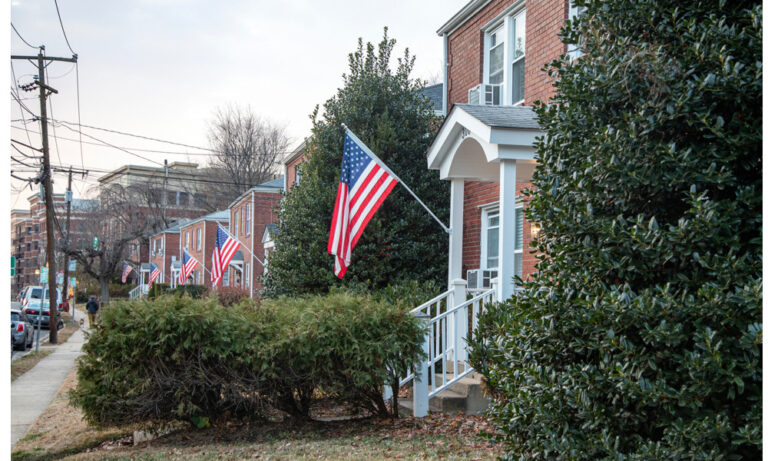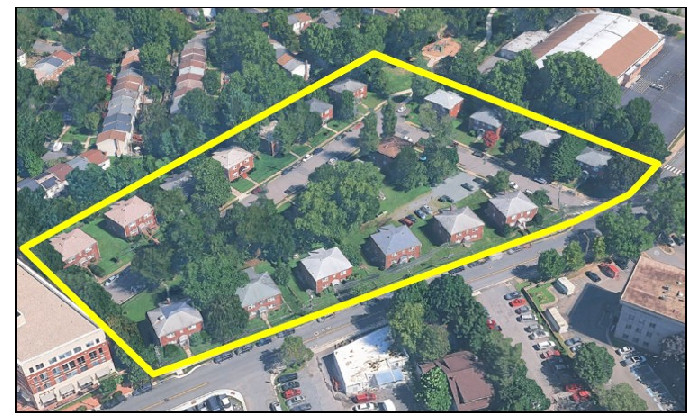
Council Moves Virginia Village Redevelopment Forward, Issues RFP
Summary
- Late in the evening of June 22, 2026, and in the early morning hours of June 23, the City Council approved a suite of actions that move the redevelopment of Virginia Village forward, including initial authorization of critical zoning changes for the existing affordable housing site and the release of a request for proposals (RFP) to the marketplace.
- In response to citizen concerns, the Council included in both its first reading of a zoning ordinance that would create a new overlay district for Virginia Village and its decision to issue the RFP a 35- rather than a 25-foot setback along Virginia Village’s boundaries with the Winter Hill neighborhood and Big Chimneys Park. The Council further amended the proposed zoning code change to put a cap of 6 rather than 7 stories on building heights at the site.
- The City Council also directed the planning staff to return to the legislative body by July 13 with a Special Use Permit/Special Exception (SUP/SE) process as an alternative and/or an addition to the proposed by-right development, which, once granted, cannot be negotiated.
- More than 20 residents came before Council to address the City’s Virginia Village initiatives. [The Pulse encourages readers to view their remarks, which begin about 13 minutes from the start of the meeting on the official video and conclude about an hour and 21 minutes later.] All expressed support for affordable housing. Those in favor of proceeding as City staff have outlined noted the waiting list of 700+ applicants for affordable housing.
- Citizens who voiced concerns requested setbacks of at least 35 feet from Winter Hill and Big Chimneys; a clear 3-story height limit along the residential edge; parking structures kept away from the existing neighborhood and park; and shadow, massing, lighting, parking, and visual impact studies and analysis. Council also heard requests to take the RFP’s option c—“the big ugly building”—off the table and to consider the possibility of “blended preservation” and an historic overlay for the World War II-era neighborhood.
- Citizens further asked that zoning changes be finalized before the City issues the RFP, that the City “slow down,” and that the process “ensure the public has a meaningful role.” Earlier on June 22, an attorney representing Winter Hill residents sent a letter to the Council formally requesting “that Council defer the Virginia Village Amendments to allow for the decoupling of the RFP from the legislative land use process.”
- The Planning Commission is now tasked with considering the proposed changes to the Small Area Plans that govern Virginia Village and the amendments to the City’s Comprehensive Plan regarding the site, with a public hearing scheduled for July 27. Meantime, changes to the zoning map and zoning text amendments for Virginia Village were also referred to the Planning Commission for its review and comment, with a public hearing set for October 26, 2026.
- The staff said they expect to issue the RFP by June 24. The City Manager will also appoint members of the committee that will evaluate the proposals the City receives.
Recent Virginia Village history
The City Council’s June 22, 2026, votes on a series of Virginia Village initiatives represent the current culmination of discussions that began in the fall and winter of 2025 following the approval of a new City Affordable Living Policy. Since mid-November, the Council has wrestled with a planning staff proposed roadmap for redeveloping the nine of 20 1940s-era quadplexes owned by the Economic Development Authority (EDA) with the intent of increasing the City’s affordable housing inventory.
By May 2026, questions about whether still-to-be-determined zoning code changes to permit moderate density of up to 7 stories in Virginia Village needed to precede releasing a request for proposals—as well as revisions to the RFP itself—led to Council’s decision to postpone action for a month. [For background, see Pulse post Council Delays Virginia Village RFP Release Until June 22, May 22, 2026.]
City Council’s amendments to existing plans and maps
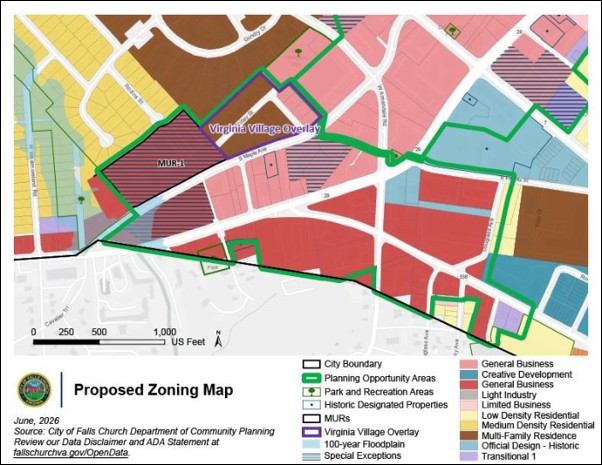
At its June 22, 2026, meeting, the City Council formally considered proposed amendments to the Downtown and South Washington Street Small Area Plans, amendments to the Comprehensive Plan Chapter 4’s references to Virginia Village, proposed Virginia Village zoning text amendments, and amendments to the official zoning map to remove a prior designation from the Virginia Village parcels and add the new Virginia Village Overlay District to these properties.
The Pulse summarizes Council’s actions here:
- Amendments to the Downtown and South Washington Street Small Area Plans (SAPs), which include guidance for the redevelopment of Virginia Village
The City Council voted 7-0 to amend the 2013 South Washington Street Area Plan to update the vision for the future of the 4.5-acre Virginia Village site. Planner Zoe Larive said the updates incorporate community input received from February through June 2026 and aim to meet the goals established by the Affordable Living Policy.
The changes detailed in the staff’s South Washington SAP Amendment Matrix and draft South Washington Street Corridor Small Area Plan (redlined version) cover building scale and density transitions, housing and affordability, open space and connectivity, and complementary uses.
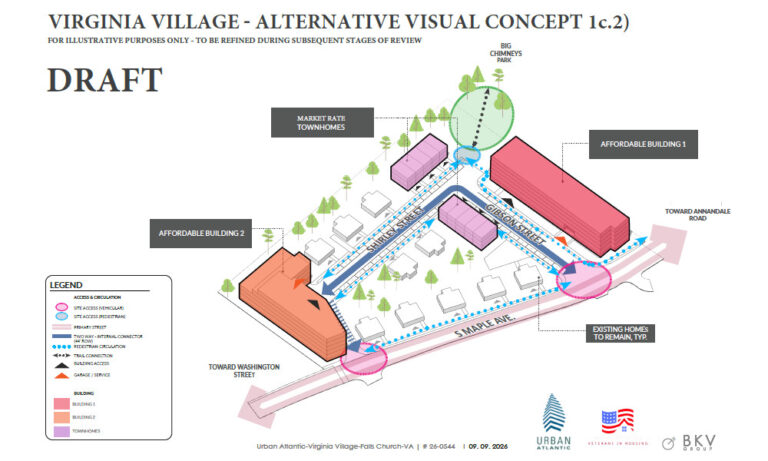
The amendments call for appropriate building setbacks and step-backs, given Virginia Village’s location between the low-density Winter Hill neighborhood and the approved high-density, 10-story Quinn senior living building across S Maple Avenue, with the tallest parts of redevelopment along Maple. They specify a variety of housing types and sizes that may include apartments and townhouses as well as moderate density for the site overall.
The amendments anticipate a significant affordable housing contribution in the number and sizes of affordable units as well as integrated green space, placemaking elements, and green links that connect Big Chimneys Park to S Maple. And they seek uses that are “neighborhood serving,” such as a childcare center, supportive services offices, dedicated community space, or an historical/cultural center for the Tinner Hill District.
Council’s action also removed from the 2014 Downtown Small Area Plan (redlined version) the Virginia Village parcels the City owns along Gibson Street that previously fell within this SAP. As part of the original Downtown SAP, the Gibson Street parcels were to be included within a larger mixed-use redevelopment of the adjacent Bowl America site. These properties were part of a special exception zoning approval in 2008 that did not proceed to construction, and the land use approvals subsequently lapsed. Since that time, no redevelopment plans have been submitted for Bowl America, which recently was purchased by a new operator and is being refurbished.
The Council sent these proposed amendments to the Planning Commission for its review and comment and will hold a public hearing and final reading of this resolution on July 27, 2026.
- Amendments to the Comprehensive Plan Chapter 4 Addendum titled “Revitalization Areas, Small Area Plans, and Urban Development Areas,” consolidating all Virginia Village properties in one Planning Opportunity Area and SAP
The Council voted 7-0 in favor of adjusting the boundaries of the properties the City owns along Gibson Street out of the City Center/Downtown Planning Opportunity Area and its corresponding Downtown SAP and into the South Washington Street Corridor Planning Opportunity Area and its companion South Washington SAP. According to the staff report outlining this change to the Comprehensive Plan Chapter 4 Addendum, “The Gibson Street properties’ inclusion within the S. Washington Street SAP will allow for a more unified vision and future planning for the larger Virginia Village area.”
A second amendment to the Comprehensive Plan incorporates by reference all small area plans adopted by City Council into Chapter 4.
The Council also sent these proposed amendments to the Planning Commission for its review and comment and will hold a public hearing and final reading of this resolution on July 27, 2026.
- Zoning Text Amendments that establish a Virginia Village Overlay Zoning District
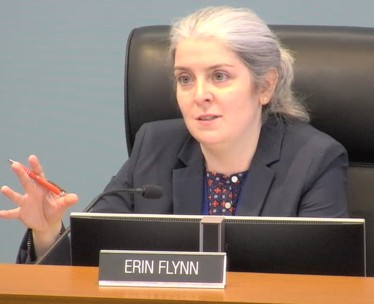
City Council members struggled with the staff’s recommended zoning text amendments (included at the end of the staff report), ultimately voting 6-1 in favor of initially approving the creation of a Virginia Village Overlay District but asking the staff to return to the Council by July 13, 2026, with a Special Use Permit/Special Exception (SUP/SE) alternative or in addition to allowing development by right. Council Member Erin Flynn said she could not vote for the zoning text amendments before seeing the SUP/SE process in writing.
City Attorney Sally Gillette acknowledged that “there is no negotiating a by-right development.” She asked the Council for guidance regarding what to incorporate in the criteria for an SUP/SE process. Council members requested that the process include a review of proposed architecture, achievement of affordability and green space goals, and impacts on adjacent properties.
Worst case scenarios
The proposed zoning ordinance for Virginia Village would apply not only to the City-owned properties, but also to the properties that remain in private hands. An overlay district is a zoning designation applied on top of an existing “base” zoning district, adding a supplementary layer of rules and regulations that, as applied in this instance, developers can elect to follow. Council members sought to determine “worst case scenarios” that might result from unintended consequences of the new overlay district, particularly when accessed by private owners.
In particular, the Virginia Village Overlay District seeks to encourage either an affordable housing or an open space contribution from potential developers by imposing one of two requirements:
1) Developers can access the overlay by providing a minimum number of committed affordable units, as measured across the combined project area, which would be affordable to households earning 60% of the Area Median Income (AMI) for the life of the project. A townhouse development application would need to provide the same number of affordable dwelling units prior to demolition or rehabilitation—a one-for-one replacement. A multifamily development application would have to make 50 percent of the total number of housing units affordable.
2) Alternatively, developers can provide a minimum public open space area equal to 50 percent of the combined project area that would be maintained for the life of the project.
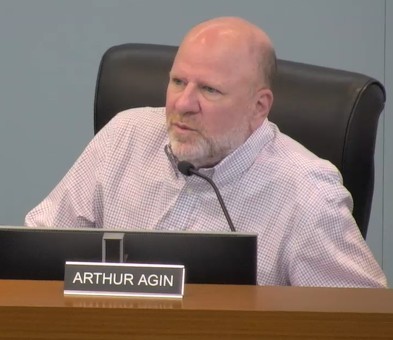
Both Council Members Flynn and Arthur Agin expressed concern about these core overlay provisions. Mr. Agin said he worries about giving developers the option of either affordable housing or open space. “We don’t want to reduce affordable housing,” he stated. Ms. Flynn asked what happens if the developer meets the 50% open space requirement and then increases building height. “You could lose all naturally occurring affordable housing on non-City-owned parcels,” she warned.
In part because of these concerns, Council Member Flynn favors the implementation of special use rather than by-right development. In so doing, she echoed the concerns voiced by Planning Commissioner Brent Krasner during the City Council’s June 15, 2026, joint work session with the Planning Commission on Virginia Village.
“It’s really hard to think about every possible iteration that might happen,” Mr. Krasner said. “There’s only one Virginia Village…. Why would we not want to retain more control through a [Special Exception] or some other process that’s not by right? My opinion is that by right is very risky for an area of the City that, as long as I’ve been here, I’ve heard how important it is to serve this particular purpose—to retain and enhance the provision of affordable housing,” he said.”Sometimes things happen that weren’t anticipated. But once it’s by right, it’s by right, and there’s no second bite at the apple.”
Commissioner Krasner urged the City to retain at least some control over redevelopment of Virginia Village, either by the City or private owners.
Planning Director Matt Mattauszek responded during the Council work session that he believes the staff has put “the right controls”—or guardrails—”in place” in the zoning language and in the RFP. “[By right] can be used for good; it doesn’t always have to be something that’s unpredictable,” he said. Mr. Mattauszek added that unique elements of Virginia Village—specifically, its affordable housing and public open space—make this redevelopment very different than a typical commercial project would be.
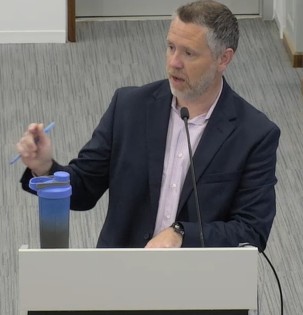
Mayor Letty Hardi noted the expense in time and money of the Special Exception process, arguing that it is a process developers of affordable housing cannot afford. “Frankly, it takes two or more years and lots of lawyers to go through all the necessary hearings,” she said. “The things we negotiate in an SE process are exactly the things we are debating now”—setbacks, heights, uses, she argued. Ms. Hardi concluded that there are many “points of decision” yet to come on Virginia Village where the City Council will control the outcome.
Amending the amendments
Ultimately, the Council amended the zoning text amendments in two ways. Council Member David Snyder proposed on June 22 that staff be directed to prepare an SUP/SE process as an alternative to by right for Council’s review, which passed 5-2, with Mayor Hardi and Council Member Justine Underhill dissenting. Staff will present that process to Council at its July 13 meeting.
Council Member Agin moved that the building height in the zoning code be capped at 6 stories, and this amendment, too, was approved, 7-0. Ms. Underhill and Council Member Marybeth Connelly said that while they also prefer 6 stories, they want to know the tradeoffs if the developer were to go to 7 stories. “It’s important to me to know what we would be giving up,” Ms. Underhill said. Senior Planner Jack Trainor responded that the RFP language can say that the zoning states a maximum of 6 stories, but the City wants to know what 7 stories might deliver.
Details about the overlay district are provided in the Pulse post Virginia Village Overlay District Details, published June 24, 2026, and will be updated as the zoning ordinance is further discussed and refined. The Council sent the proposed zoning changes to the Planning Commission for their review and comment, and a public hearing is scheduled for October 26, 2026.
- Amendments to the official zoning map
The Council voted 7-0 to remove the prior Mixed-Use Overlay District, or MUR-1, designation from the Virginia Village parcels and add the new Virginia Village Overlay District to these properties. While the bulk of the Virginia Village site is zoned R-M, or multifamily residential, the City’s four properties on Gibson Street abutting the Bowl America will remain zoned B-2 for general business.
In response to an inquiry from the Pulse, Mr. Mattauszek said, “At present, staff is not planning to rezone the four Gibson Street properties. The combination of B-2 and R-M zoning districts (that cover Virginia Village) previously worked just fine under the MUR overlay district—an overlay that was established over 25 years ago as an alternative option for those owners. We believe the new overlay district we are recommending (to replace the MUR) will function similarly and not conflict with the underlying zoning districts, which will remain unchanged—should property owners elect to utilize those options in the future.”
The Council sent the proposed zoning map to the Planning Commission for their review and comment, and a public hearing is scheduled for October 26, 2026.
Issuing the RFP
Lastly, the City Council voted 6-1 to issue the latest version of the RFP to the marketplace. Again, Council Member Flynn said that, while she is “hopeful” about the final outcome of the Virginia Village redevelopment process, her vote on the release of the current RFP had to be “no.”
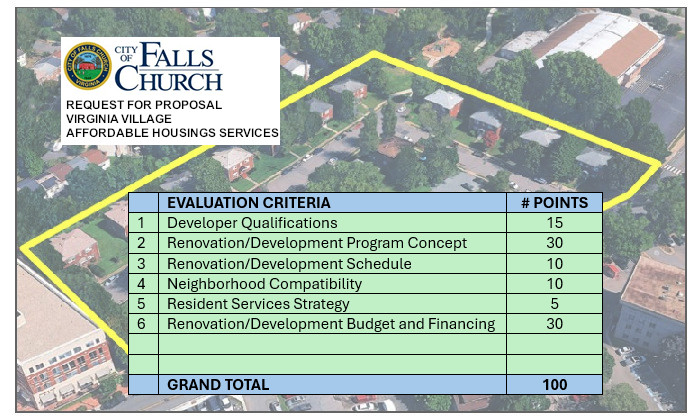
Version 5 of the RFP (prior to Council’s June 22 changes) pushes most deadlines by one week, with proposals due by August 7, 2026, and final selection of a developer by September 8, 2026. Mr. Mattauszek said he views the RFP as “an instruction manual” for the Evaluation Advisory Committee that “will set them up for success.” He reminded Council members that there will be opportunities to issue an addendum to the RFP and to amend the proposed zoning ordinance with final approval not scheduled until October 26.
Vice Mayor Laura Downs thanked the Planning Director and his staff “for listening to the community” on issues of the project’s compatibility with the neighborhood. Council Member Connelly expressed appreciation to the planners for incorporating comments from the Environmental Sustainability Council (ESC). The ESC requested that more robust green building certifications such as Enterprise Green Communities Certification Plus Zero Emissions be preferred over LEED or similar certifications. Ms. Connelly said she believes that requirement will reduce utility costs in any redevelopment.
Continuing services for Virginia Village residents
Ms. Flynn emphasized the importance of continuing services to Virginia Village residents displaced by any redevelopment. To date, there has been no substantive public discussion of the range of services the neighborhood’s residents will need prior to, during, and after redevelopment.
During the June 15 work session, City Manager Wyatt Shields said that instead of providing a City Tenant Relocation Policy, as originally planned, the RFP will adhere to US Department of Housing and Urban Development (HUD) General Relocation Requirements as well as Virginia relocation assistance policies. He said tenants must be supported until the new housing is completed, and they then have first right of refusal to live in it. Children attending the City’s schools would continue to be enrolled; however, transportation for families relocated outside the City is not currently covered and remains under discussion.
Continued public involvement
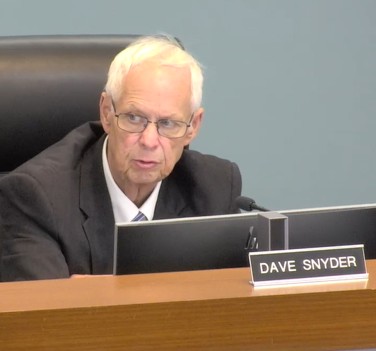
Council Members Snyder and Agin expressed their expectation that the public will continue to be involved in and able to comment on zoning changes and any proposals received as a result of the RFP. City Manager Shields said the zoning process will be fully open for public comment.Mr. Mattauszek said he expects executive summaries of all proposals received as a result of the RFP to be available on the City’s website. However, City Attorney Gillette cautioned that the proposals the Evaluation Advisory Committee and the City Council receive will contain proprietary information. “The summaries will have to be very summary,” she said, adding that “voluntary disclosures by developers would work.”
Mr. Snyder said, “I want to make sure folks know that we will give them as much information as procurement law allows,” that the proposals may include various combinations of the three scenarios in the RFP, and that the City Council can reject any or all of the proposals the City receives.
Public reaction
Public comment on the proposed amendments to land use and zoning and the RFP have been extensive. More than 20 people appeared before the City Council during the public comment portion of the agenda on June 22. [The Pulse encourages readers to view their remarks, which begin about 13 minutes from the start of the meeting on the official video and conclude about an hour and 21 minutes later.] All expressed support for affordable housing. Those in favor of proceeding as City staff have outlined noted the waiting list of 700+ applicants for affordable housing.
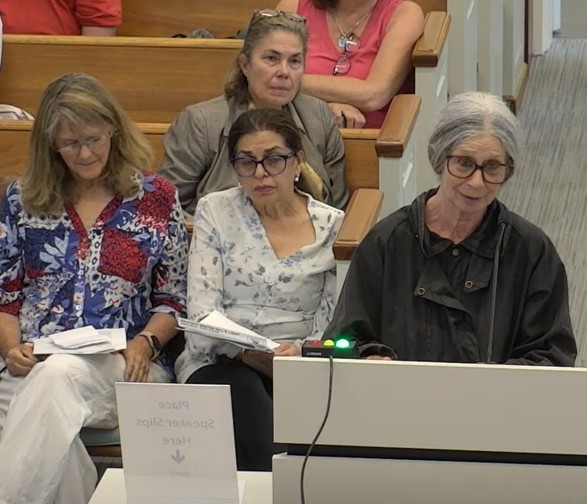
Those who voiced concerns in person and in writing requested setbacks of at least 35 feet from Winter Hill and Big Chimneys; a clear 3-story height limit along the residential edge; parking structures kept away from the existing neighborhood and park; and shadow, massing, lighting, parking, and visual impact studies and analysis. Council also heard requests to take the RFP’s option c —“the big ugly building”—off the table and to consider the possibility of “blended preservation” and an historic overlay for the World War II-era neighborhood.
Citizens further asked that zoning changes be finalized before the City issues the RFP, that the City “slow down” and “take the time needed to do this correctly,” and that the process for managing the dispensation of public land “ensure the public has a meaningful role.”
Winter Hill residents, including former City Council Member and Mayor Nader Baroukh and Bernadette Lim Fancuberta Baroukh, retained legal counsel to formally request that City Council delay its consideration of proposed amendments to the Downtown and South Washington Street SAPs, the Comprehensive Plan Chapter 4’s references to Virginia Village, the proposed Virginia Village zoning text amendments, and amendments to the official zoning map.
Attorney Gifford R. Hampshire of Blankenship & Keith, PC, wrote to Council on June 22, 2026, that “The purpose of this letter is to prevent arbitrary and capricious decision making. We request that Council defer the Virginia Village Amendments to allow for the decoupling of the RFP from the legislative land use process.”
Mr. Hampshire continued, “If Council nonetheless proceeds on June 22, we request that the record reflect our clients’ objection that the process appears predetermined, the zoning and map amendments appear project-driven, and the current record is insufficient under Virginia law to support the proposed amendments.”
References
- City Council Action Meeting, June 22, 2026. This official video will not display properly on a small screen as it includes the agenda.
- City Council Action Meeting, June 22, 2026. YouTube video.
- City Council Work Session, June 15, 2026. This official video will not display properly on a small screen as it includes the agenda.
- City Council Work Session, June 15, 2026. YouTube video.
- Staff Report on a Resolution to Adopt Amendments to the Downtown and South Washington Street Small Area Plans Relating to Land Use, Zoning, and Related Guidance for the Virginia Village Area, June 22, 2026.
- South Washington SAP Amendment Matrix, June 22, 2026.
- Draft South Washington Street Corridor Small Area Plan, June 22, 2026.
- Virginia Village Comprehensive Plan Chapter 4 Amendments Staff Report, June 22, 2026.
- Draft Comprehensive Plan Chapter 4 Revitalization Zones and Small Area Plans, June 22, 2026.
- Redlined Downtown Small Area Plan, June 22, 2026.
- Virginia Village Map Amendment Staff Report, June 22, 2026.
- Virginia Village Zoning Text Amendments Staff Report, June 22, 2026.
- Virginia Village Collected Board and Commission Comments, June 22, 2026.
- Virginia Village Shadow Studies, June 22, 2026.
- Public Comments on Virginia Village Redevelopment, June 22, 2026.
- Virginia Village Request for Proposals Staff Report, June 22, 2026.
- Virginia Village Affordable Housing Opportunity Request for Proposals (Version 5), June 22, 2026.