Council Advocates Return of Site Plan Authority to Planning Commission
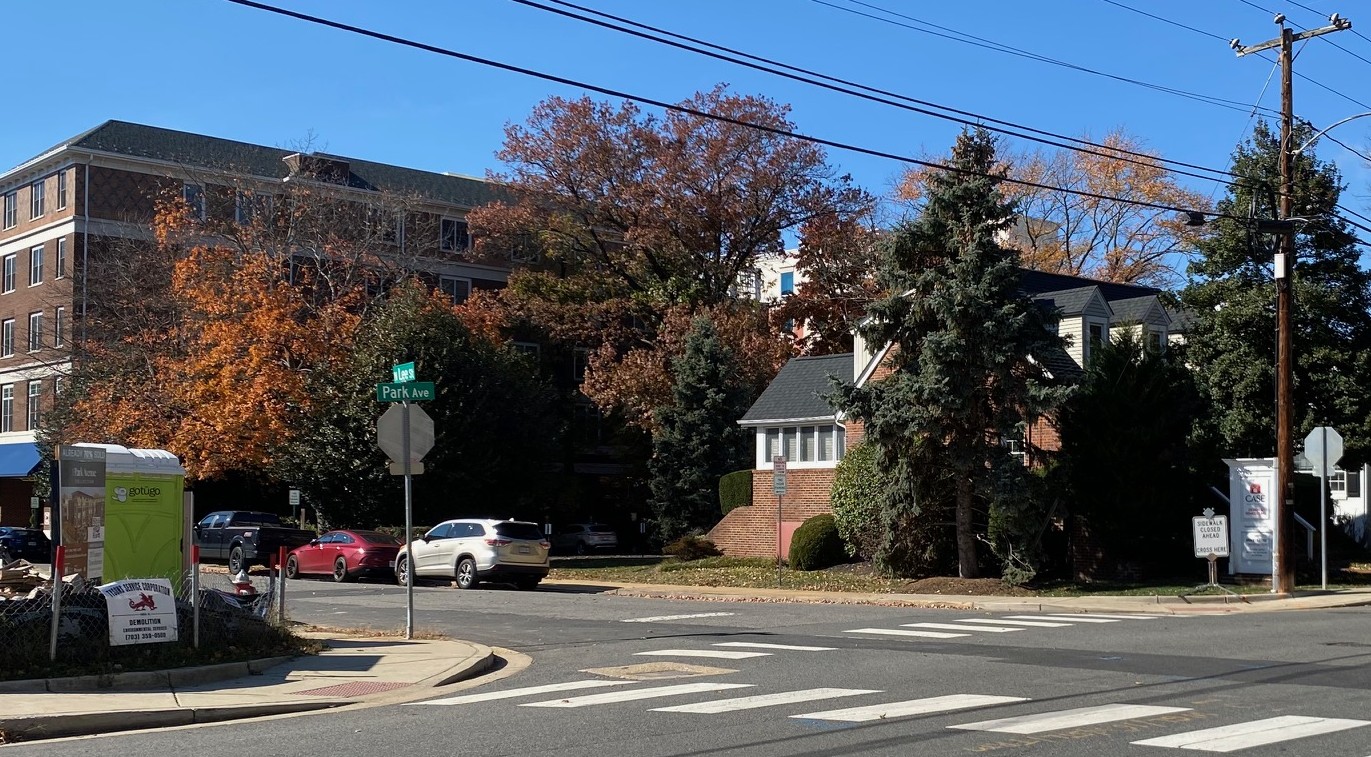
Above, the location of another likely townhome development at the corner of N Lee Street and Park Avenue behind The Kensington and across the street from the Lee Park Townhomes now under construction. If this application is made, it will be reviewed and approved by the Planning Director, the City’s designated agent, rather than the Planning Commission under the new site plan process mandated by the state.
Update Summary
Following a unanimous vote on December 8, 2025, to approve code changes required by a new state law, the City Council voted 6-1 to ask the General Assembly to allow the Planning Commission to serve as the designated agent in approving City site plans. Mayor Letty Hardi cast the dissenting vote.
By making site plan approval authority a formal part of its legislative program for the 2026 legislative session in Richmond, the Council acted on a unanimous recommendation from the Planning Commission at its November 19 meeting that Council lobby to amend the statute.
Staff suggested that a straightforward solution to this issue would be for the state legislature to amend the law to increase its population threshold permitting the local planning commission to serve as the designated agent from the present ceiling of 5,000 to 25,000. With a population of just over 15,000, the City’s Planning Commission could then again approve site plans as it did before the state law went into effect on July 1, 2025.
No discussion prior to the vote
Principal Planner Henry Zhang briefly updated the Council on changes to the staff report since October 2025, which consisted primarily of the Planning Commission’s November 19, 2025, recommendation that the law be amended to permit the Commission to continue to approve the City’s site plans.
After opening the public hearing and receiving no comments, Mayor Letty Hardi closed the hearing and asked for the vote. Council unanimously adopted the proposed site plan amendments to the City’s code in accordance with the state law.
Noting that the vote was called quickly, Council Member David Snyder acknowledged that the City must deal with the law as the staff has outlined unless and until the statute is changed. Nonetheless, “this action is something I really don’t like,” he said.“I ask whether we’re prepared to follow the Planning Commission’s request [that we advocate] for making the Commission the designated agent.”
As chair of the Council’s Legislative Committee, Mr. Snyder stated he supports the Commission’s recommendation and inquired whether “we are moving forward” to address “special interest legislation that should never have been enacted” and that he hopes will be amended or repealed.
Formally including the Planning Commission’s request in the City’s legislative program
Community Relations and Legislative Affairs Director Cindy Mester replied that following Council’s passage of the site plan amendments, she understood the Planning Commission’s request would be pursued. However, she added, “Due to the timing of the Commission’s action and Council’s adoption of its legislative program, this [item] isn’t specifically called out.”
City Attorney Sally Gillette further cautioned that “because Council has adopted its legislative program, if [Council] would like to amend it, [Council] would need to take a vote to add this particular item to your legislative agenda. The ordinance tonight would not necessarily imply that you favor having the Planning Commission act as the designated agent.”
Accordingly, Mr. Snyder moved to amend the City’s legislative program to include the action requested by the Planning Commission. Council Member Erin Flynn seconded the motion, and the Council voted 6-1 to approve it.
Monitoring the new approach to site plan approvals

Following her “no” vote, Ms. Hardi said she would like to “make sure we monitor how this goes…now that we’ve adopted the new process and the new designated agent authority,” which is vested in the Planning Director. She asked the staff to keep the Council informed. “Even if the General Assembly [acts], it [won’t] go into effect until July 1, 2026, and so we’re going to have seven months of the new process. …It would make sense to be apprised of how that process goes. That is my request.”
Principal Planner Zhang said that based on his participation in the American Planning Association Virginia Chapter, he anticipates that body will ask the legislature to raise from 5,000 to 25,000 the population ceiling permitting the local planning commission to serve as the designated agent. Should this change to the law be enacted, the City could name the Planning Commission its designated agent for approving site plans.
“We’ll see how the next session goes,” Ms. Hardi responded.
Hardi appointed to Governor-elect Spanberger’s transition committee
Separately, Mayor Hardi was named to Governor-elect Abigail Spanberger’s “United for Virginia’s Future” transition committee. Ms. Hardi co-chairs the policy committee titled Commerce & Trade: Housing.
References
- City Council Meeting, December 8, 2025. This official video will not display properly on a small screen because it includes the agenda. Site plan code amendment discussion begins at timestamp 1:14:04 and ends at timestamp 1:21:48.
- City Council Meeting, December 8, 2025. YouTube video. The relevant timestamps on YouTube are 1:20:01-1:27:51.
- Staff Report on site plan code amendments, December 8, 2025.
Site Plan Approvals Limit Planning Commission, Public Input
November 1, 2025
Summary
The City Council gave its initial blessing on October 27, 2025, to changes in the City’s process for approving site plans that curtails Planning Commission and public input in accordance with a new state law. The City Attorney confirmed the Council had no choice but to vote for these process changes or risk invalidating future site plan approvals.
Council’s approval follows planning staff presentations at the September work sessions of the City Council and the Planning Commission where views regarding the impact of the state law ranged from “this is a dumpster fire” to “a lot of good can come from this.”
Another Planning Commission meeting with a public hearing is scheduled for November 19 with a final City Council vote on December 8, 2025. The new process will soon be tested by an application that the City expects to receive from Madison Homes to build a 15-unit townhome development at N Lee Street and Park Avenue, across the street from the Lee Park Townhomes development and behind The Kensington at the corner of W Broad Street and N Lee.
Meantime, both the planning staff and some members of the Commission and the Council expressed interest in either changing the law or seeking an exception for Falls Church during the 2026 legislative session in Richmond.
The state law’s requirements
The new Virginia code, enacted in spring 2025 and embodied in Senate Bill (SB) 974 and House Bill (HB) 2660, removes local governments’ planning commission and governing body (for Falls Church, City Council) authority to review and approve site plans, subdivision plats, and other plans of development, shifting this authority to a designated agent to exercise these powers. This includes developments that fall under the City’s Special Exception ordinance, such as those planned for future phases of the West End; Council is no longer permitted to approve the site plan portion of this development type.
The General Assembly also shortened the maximum review periods for site plan and subdivision applications based on the proposed use (mixed-use or single use) and submission type (first submission or resubmission). For example, the maximum review times for parcels of single-use commercial or residential real estate have been amended from 60 days to 40 days on first review, from 45 days to 30 days on second review, and to 14 days on third and subsequent reviews. The clock starts as soon as an application has been submitted and the associated fee is paid.
In their October 27 report to City Council, the planning staff states that its “understanding is that these efforts were intended to support the broader development community by attempting to expedite the review process for development applications across Virginia’s jurisdictions.”
Faced with an effective date of July 1, 2025, staff recommended and the City Council named the City’s Planning Director as the “designated agent” on June 16 and initiated the code changes required by the legislation with the goal of retaining, to the degree possible, the advisory roles of the Planning Commission and the public in site plan reviews.
The Commission’s subdivision approval authority will not be affected by the state law changes because that authority is included in the City Charter, which takes precedent over any changes to Virginia law. [For more information, see the Pulse posts New State Law Guts Public Input on Site Plans, June 28, 2025, and Council Seeks to Retain Planning Commission Review of Site Plans, July 17, 2025.]
Developing an accelerated approval process
In work session presentations to the City Council on September 15 and the Planning Commission on September 17, Planning Director Matt Mattauszek noted that site plans apply to commercial renovations, townhomes, mixed-use projects, and other projects per City code.
He said that no matter what the process, the following “folks have to be involved, and these topics have to be covered” when reviewing the site plans for any development.
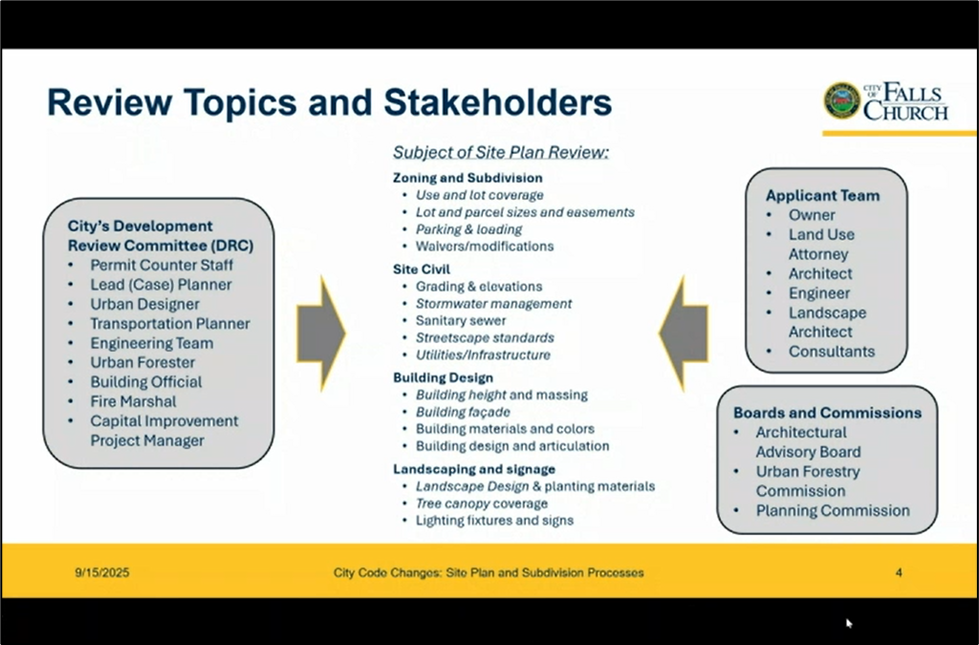
Source: Planning Staff presentation to City Council and the Planning Commission in September 2025
Until now, the process has proceeded as outlined below, usually going through three rounds of review for an average of 90 days to final approval.
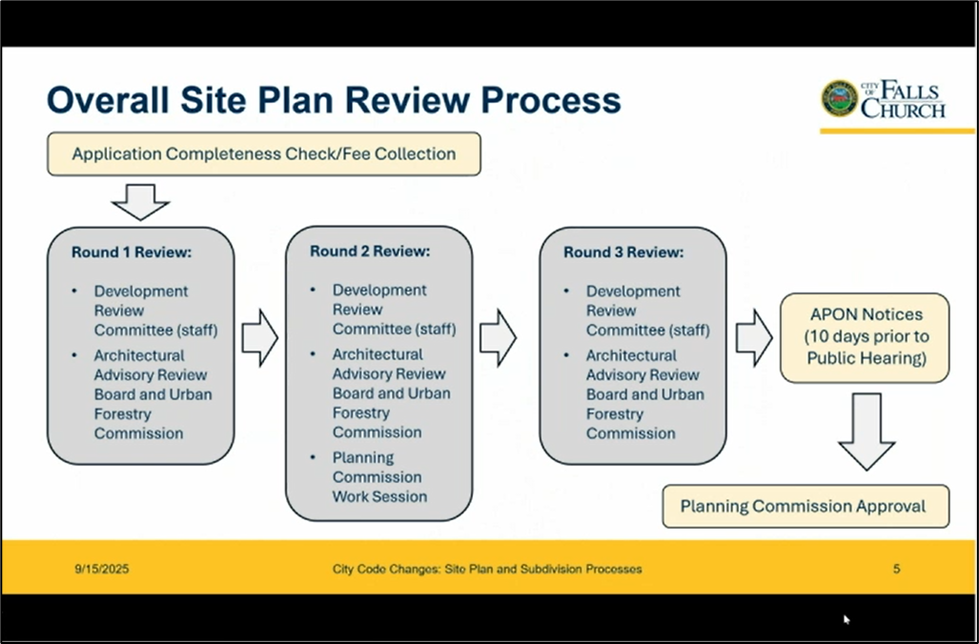
Source: Planning Staff presentation to City Council and the Planning Commission in September 2025
[Note: The acronym APON refers to Adjacent Property Owner Notice.]
In practice, Mr. Mattauszek said, the City’s 45-day review period represents only the final submission. He added that the time limits specified in HB 2660 and totaling 84 days for review of single-use residential or commercial development applications are equivalent to the City’s current “up to 90-days” review process.
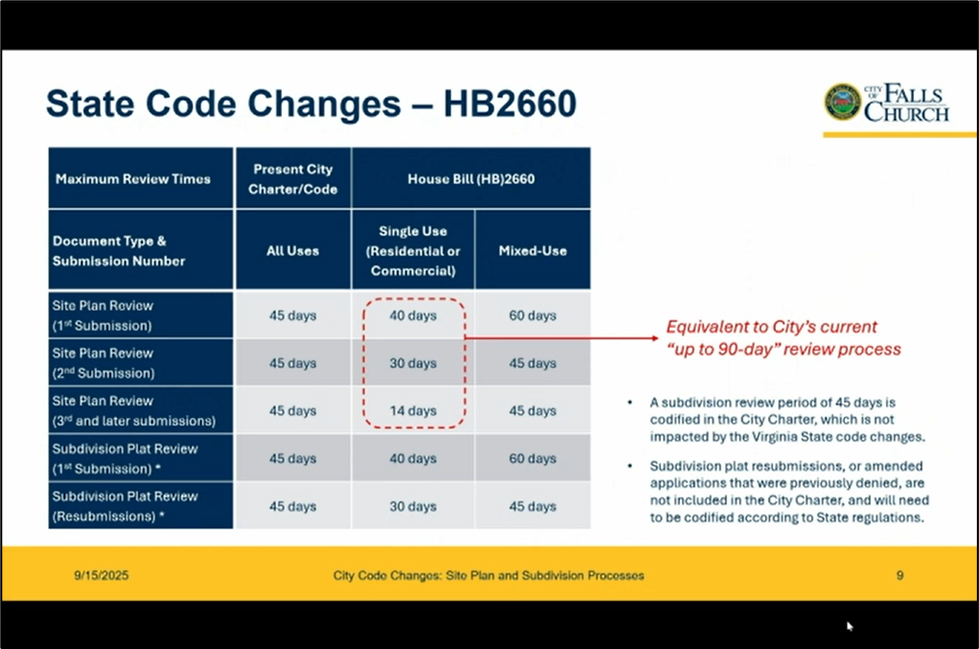
Source: Planning Staff presentation to City Council and the Planning Commission in September 2025
For added context, since 2006 the City has processed a total of 128 site plan and related applications, including site plan amendments, for an average of six to seven applications per year. The staff said recent approvals of the OakPark Townhomes took 88 days and the Lee Park Townhomes, 117 days. [For more information on these developments, see Pulse posts OakPark Townhomes—The First T-Zone Project on Park Avenue, May 1, 2024, and Lee Park Townhomes Is Approved; Planning Commissioners Reflect on the T-Zone Ordinance, September 26, 2024.]
Key changes being implemented
In addition to shifting approval authority from the Planning Commission to the designated agent for all site plan applications, the planning staff proposes:
- Updating the development application fee structure to reflect the impact of shortened review times for initial site plan applications and their resubmissions ($3,850 for initial submissions and $1,925 for resubmissions).
- Establishing new criteria for the designated agent to apply when considering requests for waivers or modifications, specifically for site plan submission requirements, minimum off-street parking, and necessary landscape buffers.
- Creating an advisory role for the Planning Commission and public comment in the context of the updated site plan review process, in which the Commission would not act on any site plan application but instead would make a recommendation to the designated agent.
- Separating the conceptual Special Exception Entitlement (SEE) from the more detailed Special Exception Site Plan (SESP) that were previously approved by City Council concurrently; the Council would approve the SEE while the designated agent would now have final approval authority for the SESP.
Principal Planner Henry Zhang said that in addition to these City code changes, the staff will emphasize early engagement with development applicants to help them navigate the new review process, particularly its accelerated timelines. The planning staff will encourage conceptual review of draft proposals that have not yet been submitted and share helpful online resources, including submission checklists, process flow charts and timelines, as well as the City’s adopted policies and plans.
“We’ll need to do a lot of preapplication work” so that the new process proceeds smoothly, is timely, and the applicant doesn’t spend too much money, he said. Staff are also at work on a site plan manual that ties steps in the process to deadlines.
The Planning Commission’s new role
Mr. Zhang added that the staff anticipates the Planning Commission’s role regarding site plans will change in the following ways:
- Applications may only be referred to the Planning Commission once during the 40-day review period for advisory review and comments for the designated agent’s consideration.
- Staff will use a basic template memorandum that describes the application material submitted. The applicant will provide any supplemental information.
- Staff’s role during Planning Commission meetings will be limited to introducing the proposal and verifying which policies and standards apply to its review. The applicant team will present application materials and answer questions.
- Transmittal of the Planning Commission’s advisory comments and any recommendations to staff and the designated agent must occur promptly after the meeting, and those recommendations “cannot influence the agent,” Mr. Zhang said. At the same time, while Planning Commission and other board and commission comments can’t influence the designated agent’s decision, Mr. Mattauszek added, they “definitely will inform it.”
The resulting process for site plan reviews is summarized in the following flow chart.
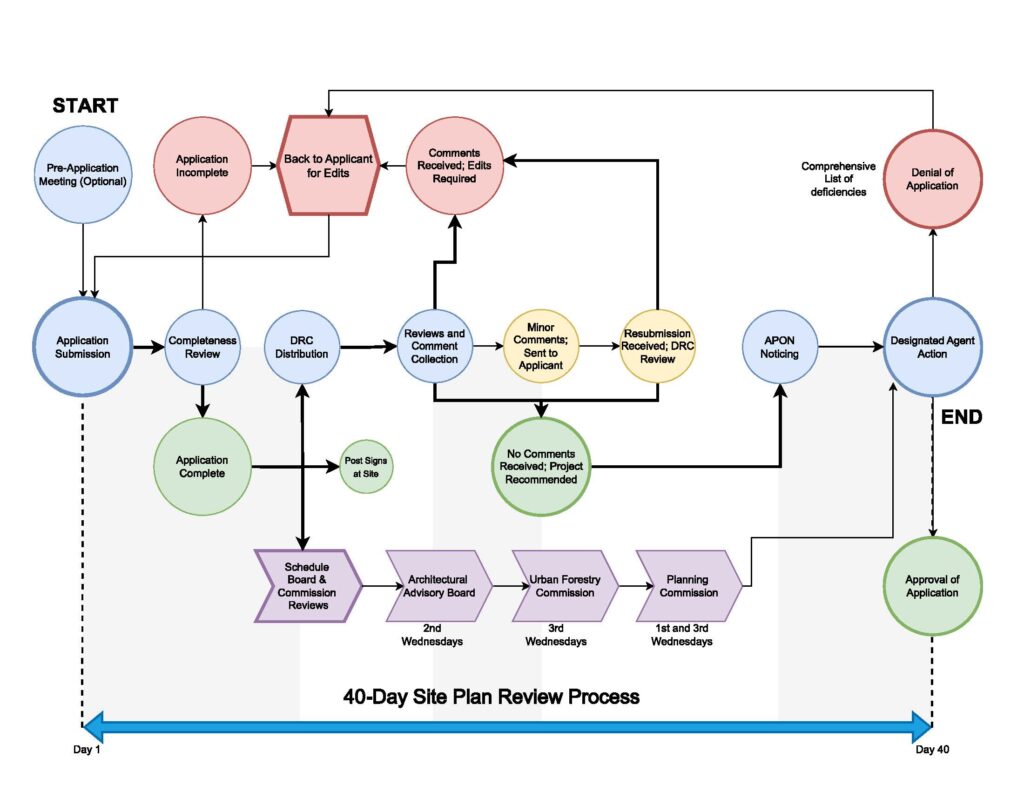
Source: Planning Staff presentation to City Council and the Planning Commission in September 2025
Planning Commission and City Council reactions
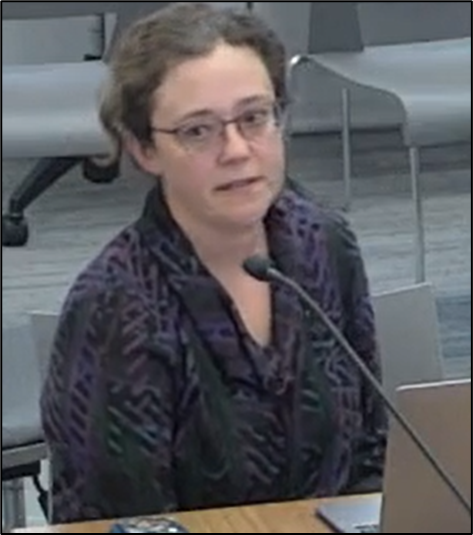
Members of the Planning Commission and City Council voiced appreciation for the staff’s efforts to improve the site plan approval process. Planning Commission Chair Andrea Caumont highlighted early engagement with applicants and clearer criteria for variances on parking and landscaping among them. Planning Director Mattauszek noted that the staff have used the new law’s requirements to conduct “a healthy assessment of where the process can be made more efficient” and transparent.
Council Member Laura Downs said she was glad to see the Planning Commission retained in an advisory role. Mr. Mattauszek noted that the staff’s treatment of the Commission in the revised process reflects “broad acknowledgement on our side…of the level of respect we have for the feedback you provide on a lot of the items we have to bring back to the Council.”
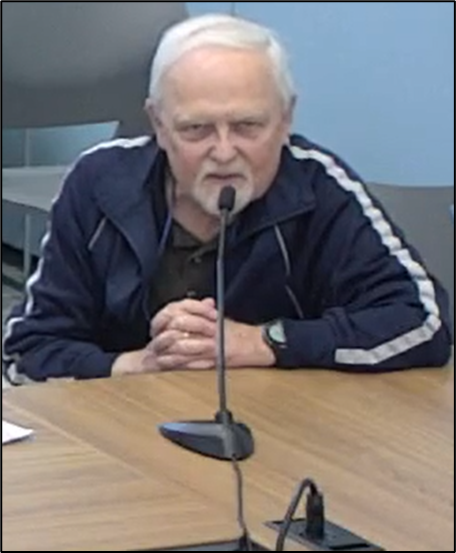
However, in general throughout their meetings in September and October, commissioners and Council members expressed concern about the new state law and its impact on the City. “Thanks to the staff for dealing with a really tough situation, but this is a dumpster fire,” said Planning Commissioner and former City Council Member Philip Duncan. “I understand in many parts of Virginia, they don’t want to build housing…but we have worked so hard here for so long to get the process that we’ve used in recent years to good effect…to get good development.”
He asked facetiously of the staff’s plan to involve the Planning Commission further in discussions of the changes necessitated by the statute, “You guys are planning our funeral; do I need to vote on it?”
Mr. Duncan said he would prefer “to take the lead in challenging what’s going on down in Richmond and put in our legislative package that we’re opposed to this, that it doesn’t fit with our ethos in Falls Church, and we want a change.”
Community Relations and Legislative Affairs Director Cindy Mester replied that the new state law, which was bipartisan, was enacted nearly unanimously in response to “the statewide perception of local governments delaying housing.” City staff and the Council would need to work with House Delegate Marcus Simon to see if he would be willing to sponsor a change, “but the building industry is pretty strong, and I’m not sure one [legislative] cycle will be enough to impact [the current law].”
Council Member Erin Flynn raised the possibility of a change to the City Charter that would add site plan approval to the Planning Commission’s existing authority to review subdivision applications.
City Attorney Sally Gillette called such a Charter amendment a theoretical option, but said the law is based on the idea that a site plan approval “is supposed to be a purely technical review where you’re reviewing what’s on the drawing and what’s in the ordinance and does it match or does it not match?” Ms. Gillette continued, “There’s not a usefulness to public opinion in that case because it’s a technical review, and, in fact, public opinion can cause an arbitrariness that is not supposed to be there.” She concluded that the changes the General Assembly made to site plan approvals “signal to me that they would not favor” a change to the City Charter.
Principal Planner Zhang said that at a recent meeting of the American Planning Association Virginia Chapter, some 40 smaller localities expressed concern about the impact of the state law on their site plan processes and believe it will be amended next year, though they remain unsure how the legislation would be revised.
At the Council’s October 27 meeting, Council Member David Snyder said that he and Mr. Duncan “are on the same page” regarding the state law, which he called “a tightly drafted, special interest bill.” The legislation, he noted, “removes the ability of local governments to control developments within their borders, reduces public engagement, [and] reduces the amount of time” for site plan reviews.
After confirming with Attorney Gillette that as a matter of law, the City has no choice but to comply, Mr. Snyder said that as chair of the Council’s Legislative Committee, he will reach out to the City’s House of Delegates Representative and State Senator to ask if there is interest in amending the legislation. He also asked City staff to determine whether other smaller jurisdictions throughout the state support changing the law.
Wait and see
Some members of the Planning Commission and Mayor Letty Hardi prefer to see how implementation of the state law goes before moving to change it. “We should not jump to ‘the sky is falling,’” cautioned Planning Commissioner Brent Krasner. “This is an unfortunate change, but we can learn as we go.” For example, “we may want to recommend ordinance changes that limit staff discretion on waivers.” Mr. Krasner concluded that, for now, “having an advisory [Planning Commission] meeting with public input is the best we can do.” He noted that planning commissions in larger jurisdictions such as Arlington and Fairfax Counties already designate site plan authority to staff, in part because of the volume of applications they receive.
Commissioner Sharon Friedlander said, “I appreciate the plan the staff has set forward; I do appreciate public comment.” She advised taking a “wait and see” attitude and “tweak it as we can.”
Among her colleagues, Mayor Hardi offered the most full-throated support for the new law. Anticipating that “a lot of good can come from this,” she said, “let’s see how it goes.” Lacking evidence that the new rules will be detrimental, “it would be a pretty empty argument to our General Assembly representatives to just say, ‘Hey, this doesn’t work for us,’” she added. “Without actual experience, it just seems like we’re being resistant to change.”
An application waiting in the wings
Assuming approval by the City Council on December 8, the changes to the City code and new site plan process will go into effect immediately. Mr. Zhang said the City is already “playing catch up” in implementing the law, which became effective July 1, 2025.
He added that an applicant is waiting to file a proposal that will test the new process. Mr. Zhang indicated that proposal is for another townhome development across the street from Lee Park Townhomes at the corner of N Lee Street and Park Avenue and behind The Kensington on the corner of W Broad Street and N Lee.
City Manager Wyatt Shields confirmed that Madison Homes plans to submit a site plan application for a 15-unit town home development at that location. Mr. Shields said representatives of the developer have requested a preapplication meeting with City staff, which was scheduled to take place the week of October 27. The City has not yet received an official application.
References
- City Council Regular Meeting, October 27, 2025. This official video will not display properly on a small screen as it includes the agenda. Discussion of the site plan amendments begins at timestamp 49:43 and ends at timestamp 1:05:02.
- City Council Regular Meeting, October 27, 2025. YouTube video.
- Site Plan and Subdivision Code Amendments Staff Report, October 27, 2025.
- Planning Commission Meeting, September 17, 2025. This official video will not display properly on a small screen as it includes the agenda. Discussion of the site plan amendments begins at timestamp 38:50 and ends at timestamp 1:34:00.
- Planning Commission Meeting, September 17, 2025. YouTube video.
- Staff Memo on Site Plan Updates to the Planning Commission, September 12, 2025.
- Site Plan Review Process Flowchart.
- City Council Work Session, September 15, 2025. This official video will not display properly on a small screen as it includes the agenda. Discussion of the site plan amendments begins at timestamp 1:36:30 and ends at timestamp 2:48:00.
- City Council Work Session, September 15, 2025. YouTube video.
- Site Plan Code Amendments Council Staff Report, September 15, 2025.