Three Bidders Vie for Virginia Village Redevelopment
Update
- The City received proposals from three organizations by the August 6, 2026, deadline in response to its request for proposals to redevelop Virginia Village. The bidders are Homes for America, True Ground Housing Partners, and Urban Atlantic Development.
- Executive summaries of their proposals are available on the City’s Virginia Village website page and from the links in the table below. The Falls Church Pulse assembled this table from the information the developers provided in their summaries.
- The Virginia Village Proposals Evaluation Committee (VVPEC) is scheduled to meet in closed sessions on August 20, 26, and 27, 2026, to rank the proposals and finalize their recommendations to City Council by Council’s September 8, 2026, meeting.
| DEVELOPER | AFFORDABLE HOUSING | FINANCING | ADDITIONAL NOTES |
|---|---|---|---|
| Homes for America, Inc. (HFA), a nonprofit affordable housing developer serving the Mid-Atlantic Region, with Quinn Evans as the architect. | Two buildings totaling 95 units. | • A 9% Low Income Housing Tax Credit (LIHTC) transaction. | |
| True Ground Housing Partners, developer of sustainable affordable housing in the DC metro area. | Two complimentary components: • Site A—a 7-story multifamily building containing 156 affordable rental homes serving households earning between 30% and 60% of Area Median Income (AMI); one-, two-, and three-bedroom apartments including two- and three-bedroom townhome-style rental units. • Site B—provide the infrastructure and site improvements necessary to support future construction of approximately 12 townhomes and then sell the pad-ready site to a market-rate townhome developer. | • Utilize a hybrid 9% and 4% LIHTC twin-deal structure, allowing the development to leverage multiple affordable housing financing resources. • Proceeds generated from sale of Site B will be reinvested into the affordable housing component on Site A. | • Stepped building massing approach transitions from lower-scale residential forms adjacent to Winter Hill (3 stories) to 7 stories along S Maple Avenue. • Leverages the site’s walkable location, transit access, and proximity to existing parking resources to focus the entire site on housing construction; would secure long-term agreements with off-site garages to provide .3 to .5 parking spaces per unit. • Emphasizes connectivity through a series of pedestrian-oriented spaces, neighborhood linkages, and public gathering areas; would extend Shirley Street beneath the multifamily building through a signature brick archway inspired by the Tinner Hill Monument to connect Virginia Village and the surrounding community to Big Chimneys Park. • Committed to achieving Enterprise Green Communities Plus certification. • Provide resident services, including comprehensive programming focuses on housing stability, health and wellness, financial capability, youth and family engagement, education, and aging in place. |
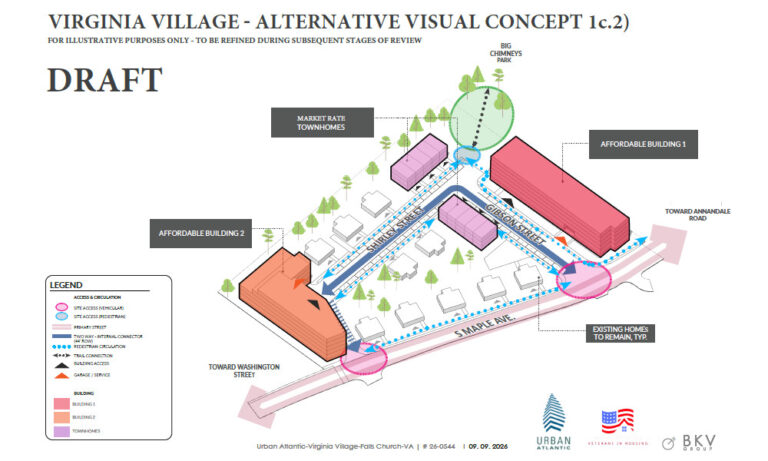
| Urban Atlantic Development, a national commercial real estate developer, in partnership with Gibson Spyre, a Virginia based and Veteran-owned small business led by Thomas Gibson, former board chair of Virginia Housing. | Nearly 200 units of affordable housing, including a substantial mix of family-sized units at 30% to 80% AMI within 6 years. Suggests two potential approaches: • A recommended plan, which materially increases the project’s number of affordable housing units by over 45% through strategic land swaps and site acquisition. • An alternative plan, which works within existing boundaries of EDA-owned parcels, resulting in less affordable housing within Virginia Village. | • Leverages 4% tax credits and available funding sources from Virginia Housing and the Virginia Department of Housing and Community Development. • Anticipates no additional financial commitments from the City of Falls Church beyond contributing its existing land to a 99-year ground lease and granting a real estate tax abatement to facilitate the project’s development and long-term affordability. | • Both proposed options are financially viable, but the recommended plan delivers more affordable housing, more community amenities, and is able to leverage an additional $4 million dollars of state-provided financial support, thereby increasing financial feasibility. |
City Receives Virginia Village Proposals, Launches Evaluation Committee
August 12, 2026
Summary
- Proposals for the Virginia Village Affordable Housing Opportunity were due to the City on Thursday, August 6, 2026. The number of responses received to the request for proposals (RFP) is not yet publicly available.
- City Council at its July 27, 2026, meeting approved on a vote of 6-1 a resolution establishing a Virginia Village Proposals Evaluation Committee (VVPEC) to assess and rank the proposals received for Council’s review and final decision whether to select a developer—and if so, which developer—to redevelop the City-owned,1940s-era quadplexes to advance City affordable housing goals.
- The seven-member VVPEC held an organizational meeting on August 6, elected City Council Member Marybeth Connelly chair and Planning Commissioner Phil Duncan vice chair, and reviewed the process the committee must follow under the state mandated procurement process for RFPs. The bulk of its work will be conducted in sessions closed to the public, though City staff and elected officials have promised publication of executive summaries of the proposals.
- Representatives for the bodies included on the VVPEC—City Council, the Planning Commission, the Economic Development Authority, the Housing Commission, and three members of City staff—were chosen by a variety of methods, with the most public and substantial debate conducted by the Planning Commission. Efforts to include representatives from the affected Virginia Village and Winter Hill neighborhoods on the committee were rebuffed.
- During its July 27 meeting, the City Council heard citizen concerns about last-minute staff changes to the zoning text amendments governing Virginia Village, amended and revised the proposed ordinance in a lengthy editing exercise from the dais, and voted 7-0 to approve it on first reading. The Planning Commission will review the ordinance and offer Council its recommendations. A public hearing and second reading have been scheduled for October 26, 2026.
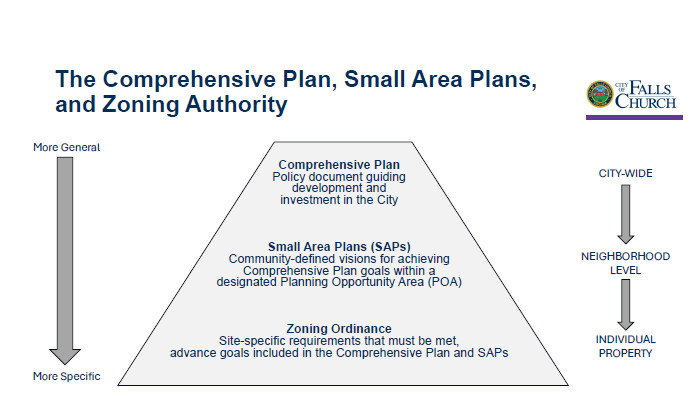
- The Council also approved changes to the City’s Small Area Plans (SAPs) for the Downtown/Center City and the Southwest Washington Street Corridor, consolidated its Virginia Village properties on Gibson Street into the Southwest Washington SAP, and incorporated by reference all approved Small Area Plans in the City’s Comprehensive Plan’s chapter 4 on land use.
The VVPEC and its process
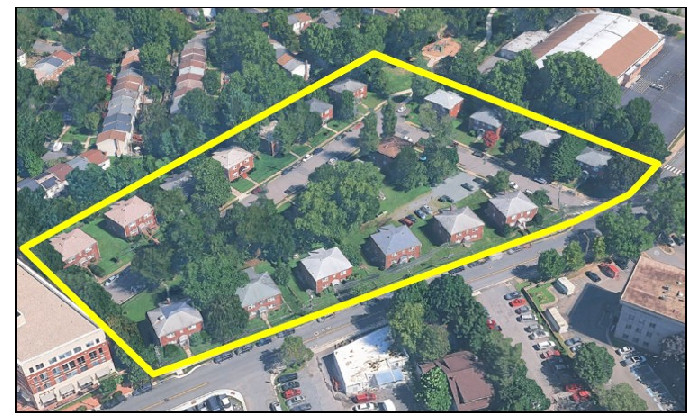
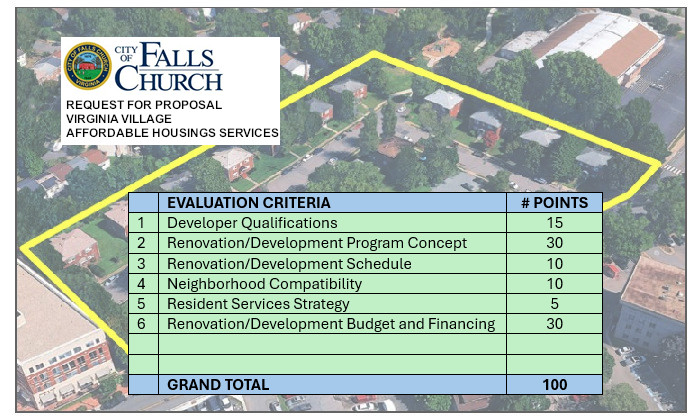
Responses to the City’s request for proposals (RFP) for the redevelopment of Virginia Village were due by 12:00 noon on Thursday, August 6, 2026. The number of proposals for the Virginia Village Affordable Housing Opportunity was not made public. [For background, see the Pulse post Council Moves Virginia Village Redevelopment Forward, Issues RFP, June 24, 2026.]
The Virginia Village Proposals Evaluation Committee (VVPEC), an ad hoc body established by City Council resolution on July 27, 2026, also held its initial organizational meeting on August 6, electing a chair and vice chair and reviewing the process its members must follow in their advisory role to the Council.
The VVPEC’s charge is to evaluate and score Virginia Village developer proposals and target the submission of its evaluation and recommended ranking to the Council at its September 8, 2026, meeting following the Labor Day holiday. Most of the evaluation committee’s meetings will be closed sessions due to state procurement rules governing the RFP process. The City Council retains the sole authority to determine final ranking of respondents and to decide whether to select a developer for the nine City-owned, Virginia Village properties.
The VVPEC represents elected leadership, boards, and commissions, and professional staff and consists of the following members.
- Falls Church City Council: Marybeth Connelly [Chair]
- Planning Commission: Phil Duncan [Vice Chair]
- Economic Development Authority: Jim Coyle
- Housing Commission: Sara Silverstein Ferrara
- City Staff: Cindy Mester (Community Relations & Legislative Affairs Director) [Staff Liaison]
- City Staff: David So (Director of Finance)
- City Staff: Matt Mattauszek (Director of Planning)
City Council Member Connelly was elected chair and Planning Commissioner Duncan vice chair with no opposition. Community Relations & Legislative Affairs Director Mester will serve as staff liaison to the committee.
Committee rules
Jim Wise, Purchasing Agent for the City of Falls Church, laid out the process the committee must follow in conducting its work. All members must sign a non-disclosure agreement that requires they not discuss the committee’s work with anyone who hasn’t signed the NDA. Next, Mr. Wise advised that the members should review the RFP the City issued on June 30, 2026, along with its subsequent three addenda, which served to answer prospective bidders’ questions and keep them up to date on Council debate and decisions regarding Virginia Village before the proposal submission deadline.
The Purchasing Agent said he and his staff will first confirm the compliance of the proposals with the RFP. Once they have completed their due diligence, the office will send conflict disclosure statements to each committee member to ensure that none of them have a vested interest in any of the proposing firms. Such interests may include personal acquaintances as well as financial stakes.
After these statements are signed and returned, Mr. Wise said the proposals will be made available to VVPEC members electronically. Technical and financial aspects of each proposal will be separated with the financial details password protected. He urged the members “to go through all of the proposals before you begin to score them,” adding “do not talk to anyone else on the committee before you complete your first review and scoring.” He asked that, if possible, members send him their scoring sheets before the first committee meeting.
Mr. Wise emphasized that discussions of the proposals should take place in the context of the full committee. “Eventually, you will come to consensus,” he promised. The committee can also go back to companies for more information as they do their work.
Despite the fact that Mr. Wise stated that discussions should take place in the committee as a whole—at least before the committee’s first meeting after members complete their initial scoring, Chair Connelly asked if she, Mr. Duncan, and Mr. Coyle could “get together” to discuss the proposals. Similarly, Vice Chair Duncan asked if he and Ms. Connelly might meet. Mr. Wise reiterated that “you can’t get together independently.” Ms. Mester added that emailing each other is not permitted either.
Mr. Wise anticipates that the VVPEC will meet as few as three and as many as six to seven times before finalizing its recommendations for the City Council. Members must ensure they can attend all of the meetings.
Mr. Wise expects that the proposals the City receives will be large. Planning Director Mattauszek said that, based on conversations with potential bidders, he believes the City will receive at least two proposals.
The public portion of the VVPEC meeting ended with the committee going into closed session. Mr. Wise said he understood that executive summaries of the proposals will be made available to the public, though it has not yet been decided how that will be accomplished.
Selecting the committee members
The members of the VVPEC were selected in a variety of ways. City Manager Wyatt Shields chose the three staff representatives.
City Council members privately discussed Ms. Connelly as their representative, and she was officially appointed to this role at the Council’s July 27 meeting.
Ms. Ferrara was formally nominated and approved by the Housing Commission as their VVPEC representative at that body’s June 9, 2026, meeting.
Three members of the EDA – Jim Coyle, Matt Quinn, and Alan Brangman – expressed interest in serving on the evaluation committee during the Authority’s July 7, 2026, meeting. EDA Chair Ross Litkenhous recused himself because he thought some of his clients might respond to the RFP, creating conflicts of interest. The EDA left it to Mr. Litkenhous to make the decision as to who would serve, and Mr. Coyle was selected with the expectation that he report back to the EDA if there are any concerns he believes are problematic in terms of the disposition of Virginia Village.
The Planning Commission held the most fulsome discussion of who would represent them on the VVPEC during its July 15, 2026, meeting. Two candidates emerged – Mr. Duncan, who has also served as a member of City Council for multiple terms, and Commissioner Brent Krasner, who in his day job is Branch Chief—Department of Planning and Development with the Fairfax County Government.Commissioner Tim Stevens nominated Mr. Duncan, stating his significant involvement in the development of the City over the last 10-15 years and his advocacy for affordable housing. Chair Andrea Caumont called Mr. Duncan “a warrior for affordable housing in the City,” and Commissioner Robert Kravinsky noted Mr. Duncan’s service at different levels of government.
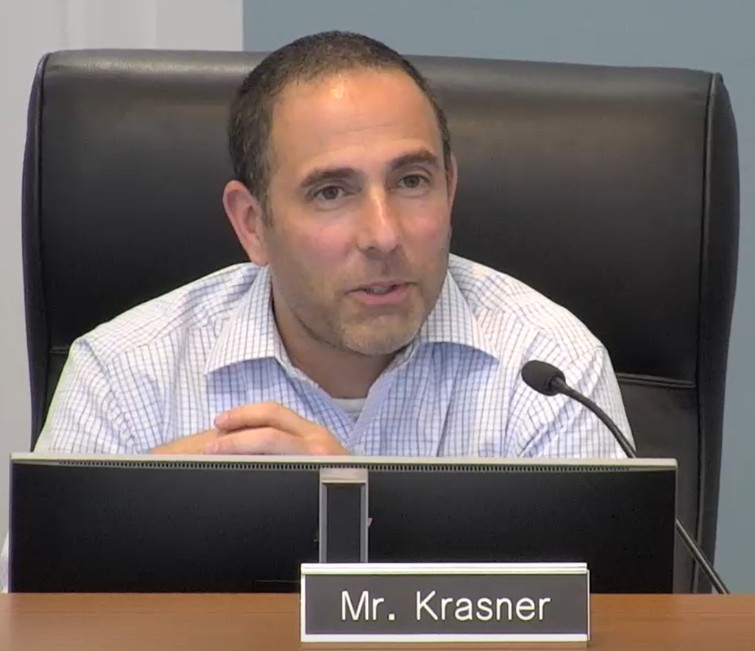
Commissioner Daniel Polinsky nominated Mr. Krasner following his statement that “I have over 20 years’ experience [reviewing development proposals] in Virginia, in New Jersey, and in New York in different jurisdictions, different sizes. I’ve worked with developers; I do it day in and day out. I’ve negotiated with developers…on affordable housing projects, on market rate projects. I think that provides a unique perspective…[that] could be helpful” to the City.
Mr. Krasner continued, “No disrespect to Mr. Duncan, but he has been a fixture for many, many decades. Maybe having a different perspective in a process like this as opposed to someone who is kind of in the in-crowd might also be worthwhile and might help the community feel that different perspectives and different people are being allowed an opportunity to participate in something like [this].”
Ultimately, the Planning Commission approved Mr. Duncan as their representative. Commissioner Sharon Friedlander was not present for the discussion. In accepting his appointment, Mr. Duncan said, “I will do my best to represent the views of all of you and the interests of the community at large.”
Representatives from the affected neighborhoods excluded
During the public comment period of the July 27 City Council meeting, several citizens from the Virginia Village and Winter Hill neighborhoods asked that they be allowed representatives on the VVPEC.
Council Member David Snyder proposed that the committee include a resident of each neighborhood for a total of nine members. “This is not a commentary on the people [appointed to] the committee,” he said, but rather an effort to achieve “an essential balance at a critical stage [in this process] that is not there now.”
Council Member Erin Flynn seconded the motion, though said she would not vote for it due to her concern about conflicts of interest of Virginia Village property owners. She added, however, that the neighbors should be involved in design discussions with any selected developer of the City’s properties.
Council Member Marybeth Connelly said she thought VVPEC members from the Planning and Housing Commissions, and the EDA already represent the citizen community. Mayor Letty Hardi added her concern that including residents of the neighborhoods “sets, potentially, a questionable precedent.”
Mr. Snyder’s motion was defeated on a vote of 6-1, and he subsequently voted against the resolution establishing the VVPEC.
A chaotic Council meeting
The staff report on amendments to the revised proposed zoning ordinance for Virginia Village at the City Council’s July 27 meeting raised citizen concerns about the accuracy and transparency of the complex Virginia Village redevelopment process. “For several months, this Council and community have worked to reach common ground,” said Bernadette Baroukh, a resident of Winter Hill. “Staff’s [latest] proposal undermines that work.”
At issue were a surprise change in allowable height from 40 feet to 50 feet along the Winter Hill edge of the proposed redevelopment and an error in the shadow studies the City conducted of the area. In addition to asking that the height at the shared boundary be returned to 3 stories or 40 feet and shadow impacts limited, citizens reiterated prior requests that garages and service areas not face Winter Hill, stormwater improvements in Big Chimneys Park be considered, and additional funding options such as historic preservation grants be pursued.
Referencing a conversation she had with City Manager Shields earlier in the day, Council Member Flynn asked him to address the need for making it clear in staff reports when changes have been made and why and at whose direction. “I take the public trust issues seriously,” she said—both the public trust “and the Council trust through this process.”
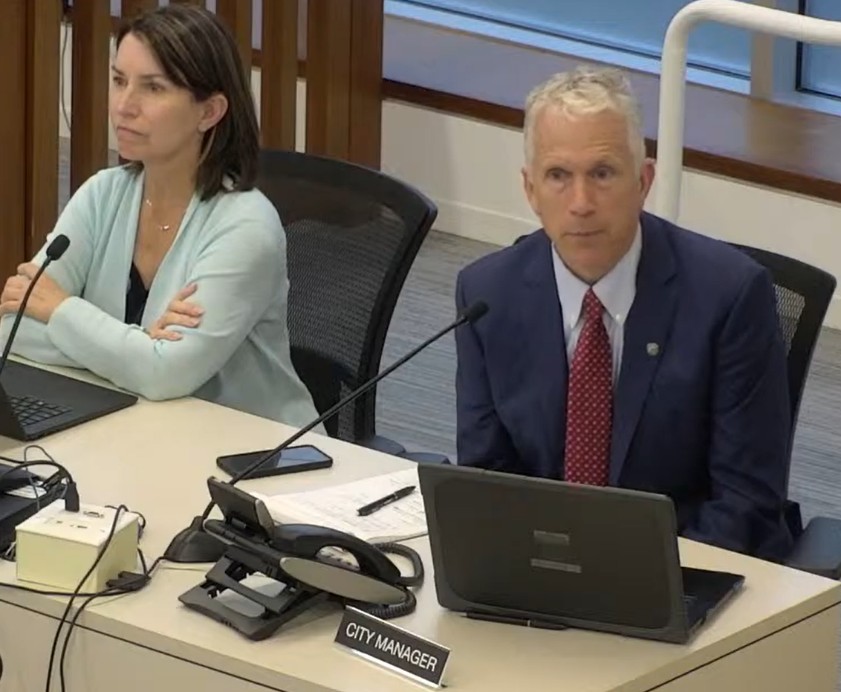
Though he did not apologize for the changes or errors, Mr. Shields said, “I want to reaffirm the staff’s commitment to serving the public and to serving the Council and the entire community on any issues that are before the City Council…. Our commitment is to be very clear about those changes so people do not need to hunt for them or find them and then ask questions about them. So we will rededicate ourselves to that need and to doing that work.”
Mayor Hardi then commented: “For staff, these are obviously really complicated projects with hundreds of pages of plans and revisions in staff reports. I know that there are going to be mistakes or inconsistencies and things that need clarification…. When we find them, we should point them out and correct them and move forward, and that’s the kind of accountability that’s important to build public trust and sustain it.”
“For everyone else, though,” she continued, “suggesting that anyone is trying to deliberately mislead the public or staff going rogue without Council direction is a serious accusation and one that should only be made when the facts support it.”
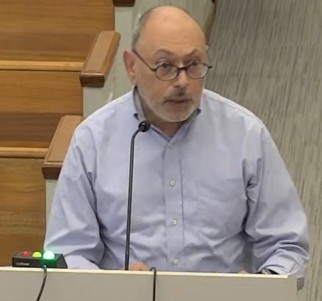
Later in the meeting, former Council member, mayor, and Winter Hill resident Nader Baroukh took issue with Mayor Hardi’s comments, saying, “At no point did I hear this evening, either from my comments or those of others, disparaging staff or placing intent, but simply providing facts of what happened.” Questioning citizen intent, he asserted, also erodes trust. He expressed his concern that too often only when citizens challenge elements in a report are they fixed. Mistakes need to be acknowledged, owned, and corrected, he said. “We as a City need to do better—period.”
Has haste made waste?
Planning Director Mattauszek, too, addressed the trust issue, suggesting that the speed at which the Virginia Village project has proceeded has contributed to the problems that were evident at the July 27 Council meeting. “At times, the schedule and other elements and competing priorities have made it difficult to track various evolutions of our work,” he said. As an example, Mr. Mattauszek called substituting a March shadow study graphic for December “simply a mistake,” while affirming that the staff’s analysis behind this work is sound.
At the same time, Mr. Mattauszek said that changes “made in the last week or so [are] directly tied to feedback we’ve collected and received from the Planning Commission [and] from all of you at the last work session…. There’s a basis and origin in everything that’s changed since the last time you saw the material.”
Council votes on suite of Virginia Village items
Ultimately, the City Council rejected the staff’s proposal that the allowable building height of any Virginia Village redevelopment along that neighborhood’s boundaries with Winter Hill be increased to 50 feet. Suggestions from Vice Mayor Laura Downs that a compromise at 45 feet in keeping with the revised T-Zone code that has permitted townhomes to be built to that height on Park Avenue failed to attract the necessary four Council votes.
Council Member Justine Underhill and Mayor Hardi expressed their desire for flexibility should RFP proposals indicate that a height of 41 or 42 feet would be needed to make the redevelopment project workable. They secured from City Attorney Sally Gillette agreement that should such a change be necessary, it would not trigger a new first reading of the Virginia Village zoning ordinance.
The City Council voted 7-0 on first reading of the zoning text amendments after redrafting sections of it from the dais in an hours-long process. It was not clear why the series of issues raised by City Attorney Gillette were not resolved in advance of the meeting. For the detailed changes to the proposed zoning ordinance, see the updated Pulse post Virginia Village Overlay District Details, originally published June 24, 2026.
The Council also unanimously adopted amendments to the Downtown and South Washington Street Small Area Plans relating to land use, zoning and related guidance for Virginia Village on second reading. They did so after restoring a sentence that had been dropped from the South Washington Street Small Area Plan that now governs all of Virginia Village: “Taller buildings should avoid casting shadows onto existing homes and park areas when possible.”
Also unanimously approved was the relocation out of the Downtown Small Area Plan to the South Washington Street Small Area Plan of the City-owned properties on Gibson Street and the incorporation of all approved City Small Area Plans into its Comprehensive Plan chapter 4 on land use. [For additional background on these issues, see the Pulse post Virginia Village Zoning, RFP Evaluation, Tenant Relocation Readied for Council Votes, July 22, 2026.]
References
- Planning Commission Meeting, July 15, 2026. Discussion of VVPEC representative takes place at about timestamp 1:30:00 and ends before 1:37:00.
- City Council Action Meeting, July 27, 2026. This official video will not display properly on a small screen as it includes the agenda.
- City Council Action Meeting, July 27, 2026. YouTube video.
- Virginia Village Zoning Text Amendments Staff Report, July 27, 2026.
- Legislative Update & Summary Minutes Actions of the City Council for July 27, 2026.
- Resolution establishing the Virginia Village Proposals Evaluation Committee, July 27, 2026.
- Virginia Village Proposals Evaluation Committee Meeting, August 6, 2026. The first 40 minutes were open to the public before the VVPEC went into closed session.
- Virginia Village Proposals Evaluation Committee Meeting Agenda, August 6, 2026.
- Virginia Village Affordable Housing Services Bid, updated as of August 3, 2026. Since the June 30, 2026, release of the RFP, three addenda have been issued.